

As businesses grow, managing customer data becomes increasingly complex. What once felt manageable in spreadsheets quickly turns into scattered information, duplicate contacts, missed follow-ups, and inconsistent communication. At this stage, many founders and marketers begin searching for the best contact management software, only to encounter another term repeatedly – CRM.
The confusion is understandable. Both systems deal with customer information. Both promise better organization. Both claim to improve relationships and increase revenue. But they are not the same thing, and choosing the wrong one can lead to unnecessary costs and operational friction.
Understanding the real difference between CRM and contact management software is essential before investing in any tool.
What Contact Management Software Is Designed to Do
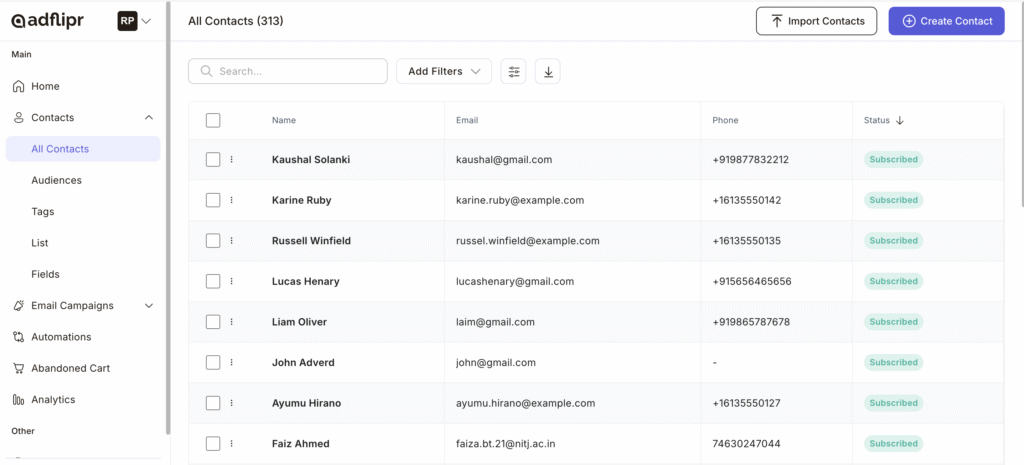
Contact management software focuses on organizing, structuring, and maintaining your customer database. Its primary purpose is to ensure that all contact information is centralized, accessible, and actionable.
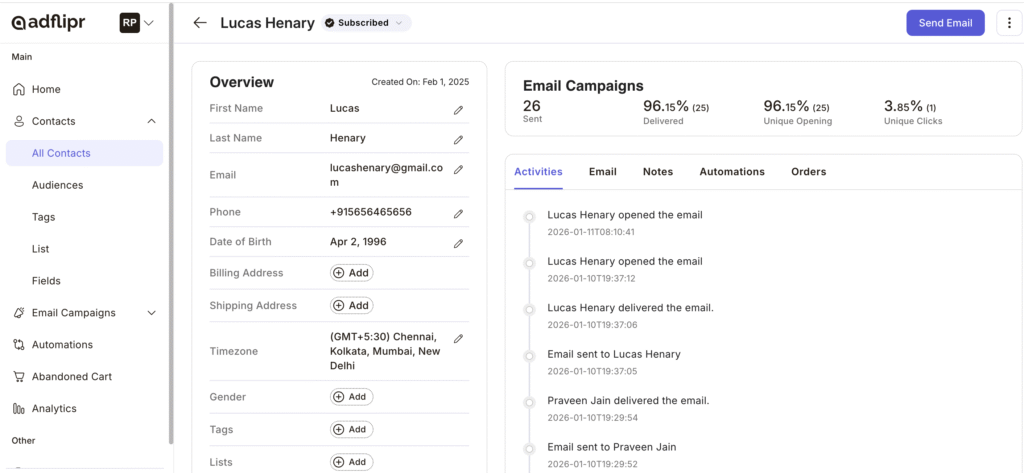
A robust contact management system allows businesses to store detailed contact records, create custom fields, segment audiences using tags, track communication history, and monitor engagement behavior. The goal is not to manage sales pipelines but to manage people — specifically, how you communicate with them.
For businesses that rely heavily on email marketing, automation, and audience segmentation, the best contact management software becomes a foundational tool. It transforms a simple list of contacts into a strategic marketing asset. Instead of sending generic campaigns, you can personalize communication based on behavior, interests, and engagement patterns.
This structured organization directly impacts conversion rates because relevance increases response.
What CRM Software Is Built For
CRM, or Customer Relationship Management software, expands beyond contact organization. It is primarily designed to manage sales processes and revenue pipelines.
A CRM typically includes deal tracking, pipeline visualization, sales forecasting, task assignments for sales representatives, reporting dashboards, and performance metrics. It is particularly valuable for businesses with structured sales teams handling multi-stage deals, especially in B2B environments where contracts are high-value and sales cycles are long.
In short, CRM software is sales-centric. It focuses on tracking opportunities from lead to close and measuring revenue performance across teams.
While CRM systems also store contact information, their core strength lies in pipeline management rather than communication segmentation.
The Practical Difference That Matters
The fundamental difference between CRM and contact management software lies in focus.
Contact management software prioritizes communication and audience organization. CRM prioritizes deal progression and sales tracking.
If your business growth depends on email campaigns, automated nurturing sequences, customer engagement, and targeted promotions, then investing in the best contact management software often delivers more practical value than adopting a full-scale CRM.
However, if your business depends on managing sales representatives, tracking deal stages, forecasting revenue, and overseeing contract negotiations, a CRM becomes essential.
The key is aligning the tool with your operational model rather than choosing based on perceived sophistication.
Why Many Growing Businesses Overcomplicate the Decision
A common pattern among startups and small businesses is adopting a CRM prematurely. The assumption is that advanced software equals professionalism. In reality, unnecessary complexity can reduce efficiency.
When businesses adopt tools filled with features they do not actively use, several issues arise. Teams may resist updating records due to complexity. Data becomes inconsistent. Training requirements increase. Costs rise without proportional returns.
In many of these cases, what the business truly needed was structured contact organization combined with intelligent email automation. The best contact management software solves that problem directly, without overwhelming the team with unused modules.
Simplicity often drives consistency, and consistency drives growth.
How Contact Management Strengthens Email Marketing
Effective email marketing depends on clean data and meaningful segmentation. Without organized contact information, personalization becomes impossible.
Consider a scenario where a subscriber downloads a specific resource from your website. A strong contact management system allows you to tag that subscriber based on interest, track their email interactions, and automatically move them into a relevant nurture sequence. If they engage further, they can be shifted into a more sales-focused campaign. If they remain inactive, they can receive a re-engagement workflow.
This level of personalization is not about pipeline tracking; it is about intelligent audience management. The best contact management software enables businesses to respond to behavior in real time, improving both engagement and conversion rates.
When contact management integrates seamlessly with automation, marketing becomes systematic rather than reactive.
Why Adflipr Is Built for Marketing-Focused Growth
Adflipr is designed specifically for businesses that prioritize communication, segmentation, and automation over complex sales forecasting tools. It combines contact management and email automation in a streamlined platform built for clarity and execution.
With Adflipr, businesses can manage unlimited contacts, create custom fields, segment audiences based on behavior, track engagement history, and build automated workflows without navigating unnecessary sales modules. The system is structured to support growth through organized communication rather than overwhelming dashboards.
For businesses seeking the best contact management software that integrates naturally with email automation, Adflipr offers a focused solution that eliminates complexity while maintaining power.
You can explore its contact management capabilities here:
https://www.adflipr.com/contact-management/
When CRM Software Is the Better Fit
It is important to acknowledge that CRM software is highly valuable in certain contexts. Businesses with dedicated sales teams, complex deal stages, revenue forecasting requirements, and high-ticket contracts benefit significantly from CRM platforms.
In these environments, visibility into pipeline progression and performance metrics directly influences strategic decisions. CRM systems provide the structure needed to manage multiple stakeholders and long-term negotiations effectively.
The decision should therefore be based on operational needs, not software trends.
Choosing the Right Path Forward
Before selecting a system, evaluate your primary growth driver. If your success depends on nurturing leads, personalizing campaigns, and automating communication, then investing in the best contact management software will likely deliver stronger results with less operational friction.
If your revenue model revolves around managing structured sales processes and forecasting pipeline outcomes, CRM may be appropriate.
The right tool is not the one with the most features. It is the one that aligns directly with how your business generates revenue.
