An established brand has a track record, reviews, and a known reputation to lean on. A startup usually has none of that, sometimes not even a finished product, which means the very first emails a startup sends have to build credibility from nothing. There’s no history to reference, no existing customer base to draw from, just a promise and whatever trust the brand can earn one email at a time.
Email marketing for startups also runs at a different pace than an established business, since a startup rarely knows its audience with any real confidence yet and has to learn fast through actual testing, not assumption. Good startup brand email marketing embraces both of these realities. Below is how a pre-launch list gets built from genuine zero, how rapid testing replaces guessing at an unknown audience, and how email results get framed for whoever’s asking about growth, an investor, a co-founder, or a board.
No track record exists yet early trust has to be earned from nothing, one email at a time
The audience is still unknown a startup often doesn’t yet know exactly who its best customer is
Growth needs to be provable, stakeholders want real numbers that show progress.
Waitlists build real anticipation, pre-launch lists provide an early signal of demand.
Every Email Sent Before Launch Is Also a Test
An established business already knows roughly who its customer is and what they respond to. A startup usually doesn’t, which means every email sent in the earliest stage is doing two jobs at once: communicating with the audience, and quietly teaching the founders who that audience actually is.
Treating early email sends purely as marketing, rather than also as market research, wastes one of the few genuinely low-cost ways a startup has to learn about its own audience before spending real money finding out the hard way.
This changes what “good” looks like for a startup’s early email program. It isn’t just about conversion, it’s about extracting real signal, what resonates, what doesn’t, who actually engages, while the cost of being wrong is still cheap.
Waitlist Emails Build Real Anticipation Before the Product Exists
Waitlist emails work by giving people a genuine reason to sign up for something that doesn’t exist yet, and then nurturing that early interest carefully until there’s actually something to sell.
Give a real reason to join, not just a placeholder form. Early access, a founding member benefit, or genuine involvement in shaping the product gives someone a concrete reason to hand over their email before there’s a product to show.
Keep the anticipation alive without overdoing it. Regular, genuine updates on progress build real anticipation, while going silent for too long lets early interest quietly fade before launch ever arrives.
Treat the earliest signups as the most valuable audience. The people who joined before there was any proof the idea would work are often a startup’s most engaged early customers, and that early trust deserves to be treated as the asset it is.
Pre-Launch Email Marketing Is a Research Tool as Much as a Sales Tool
Pre-launch email marketing works by using the earliest sends to learn about an audience whose preferences are still genuinely unknown, not just to announce a future launch date.
Test messaging before committing to it. Different subject lines, value propositions, and framing sent to small segments of a waitlist reveal what actually resonates, cheaply, before that messaging gets locked into a bigger launch campaign.
Pay close attention to what gets engagement. Which specific update or announcement drove the most clicks or replies is real, direct signal about what an early audience actually cares about, more reliable than an internal guess.
Let real signal shape the actual launch. Insight gathered from pre-launch testing should genuinely inform positioning and messaging at launch, not sit unused once the excitement of building the list wears off.
Growth Metric Emails Prove Traction to the People Who Need to See It
A startup often has to demonstrate real growth to someone, an investor, a co-founder, a board, and growth metric emails work by making that proof visible and credible rather than anecdotal.
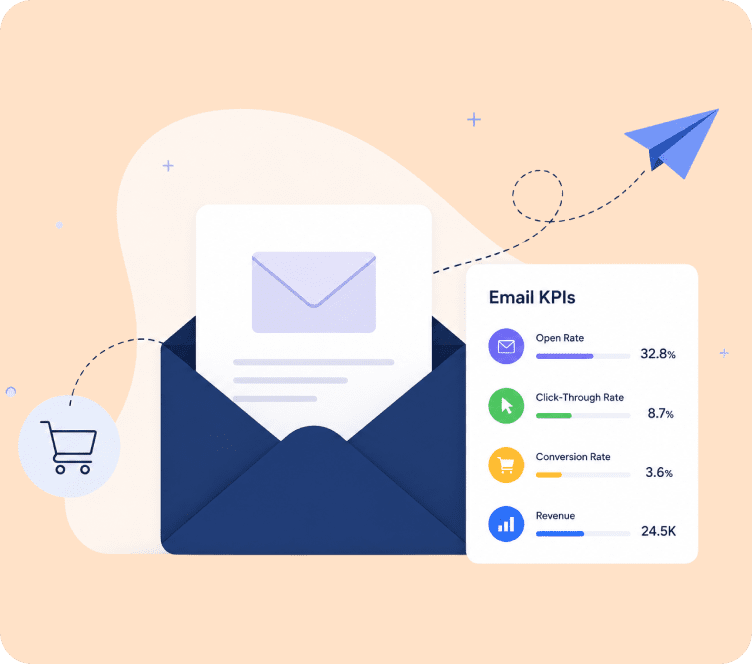
Track the numbers that actually matter. List growth rate, engagement, and revenue directly attributable to email tell a clearer growth story than vanity metrics that look good but don’t reflect real traction.
Make the story clear, not just the data. A simple narrative connecting email growth to broader business momentum communicates more to a stakeholder than a raw spreadsheet of numbers ever will on its own.
Keep the reporting honest. A startup’s credibility with investors and partners depends on accurate numbers, and framing modest but real growth honestly builds more long-term trust than inflating early results ever would.
How Adflipr Helps
A waitlist that builds genuine anticipation, pre-launch testing that actually teaches the brand about its audience, growth numbers clear enough to show an investor: each one depends on the tool seeing real signup and engagement data, live, whether the store runs on Shopify or WooCommerce. Adflipr is built on that connection, purpose-built for startup brand email marketing rather than adapted from a generic enterprise template, with every flow on this page ready to switch on. This is what real startup email marketing requires.
| The job | Manually or with a generic email tool | With Adflipr |
|---|---|---|
| Waitlist building | A basic signup form with no ongoing nurture | A genuine pre-launch sequence that builds and sustains real anticipation |
| Audience testing | Guessing at messaging without real data to confirm it | Segment testing that reveals what actually resonates before a full launch |
| Growth reporting | Manually compiling numbers for investor or team updates | Clear, revenue-linked reporting ready to share with stakeholders |
| Early customer retention | No way to identify or prioritize the earliest supporters | Early signups flagged and treated as the high-value audience they are |
|
Your monthly bill
|
Priced on total list size, dead addresses included
|
Active contact billing, so you pay for subscribers who engage
|
The WooCommerce integration is native and real-time, down to product variants. And the flows above are switched on, not built.
✓ Pre-launch waitlist sequencing
✓ Segment-based testing
✓ Growth reporting for stakeholders
✓ Active contact billing
Frequently Asked Questions
By giving people a genuine reason to join, like early access or a founding member benefit, and then nurturing that interest with real, regular updates rather than going silent until launch day. Waitlist emails built this way keep anticipation alive over time, and treating the earliest signups as a startup’s most valuable early audience respects the trust they extended before there was any proof the idea would actually work.
By treating pre-launch emails as a genuine research tool, not just a promotional channel. Pre-launch email marketing that tests different messaging on small segments and pays close attention to what actually drives engagement produces real, direct signal about an unknown audience, cheaply enough that being wrong early on costs very little compared to finding out after a full launch.
By tracking the numbers that reflect real traction, list growth, engagement, and revenue directly tied to email, and presenting them honestly rather than leaning on vanity metrics. Growth metric emails and reporting built around real, credible numbers protect a startup’s long-term trust with stakeholders far better than an inflated early story ever could.
A realistic goal for email marketing for startups is a genuinely engaged pre-launch list that converts meaningfully at launch, plus real, usable insight into audience preferences gathered before expensive mistakes get made. Startup email marketing done well often becomes one of the clearest, most cost-effective growth signals a young company has to show, both to customers and to whoever is watching the numbers.