
Most small business owners already know email marketing works. What they don’t always know is why their own emails aren’t working, even though they’re doing “everything right” on paper.
Here’s the number that should change how you think about this: email marketing returns somewhere between $36 and $42 for every dollar spent, and for retail and ecommerce brands specifically, that figure climbs closer to $45, with well-optimized programs on platforms like Shopify pushing even higher. No other channel comes close, which is exactly why email marketing for small business owners deserves more attention than a once-a-month newsletter. But that average hides a wide gap between businesses doing it well and businesses just sending newsletters into the void.
These email marketing tips for small business owners aren’t the generic advice you’ve read a dozen times. This is a small business email marketing strategy built specifically around what actually moves the needle for small ecommerce brands running on Shopify or WooCommerce, not just general marketing theory.
The Email Marketing Tips for Small Business Owners That Actually Move Revenue
The small business email marketing tips below are ordered roughly by impact, so start from the top if you’re short on time and want the biggest return first.
Grow a List You Actually Own
Renting reach from social media algorithms is risky. Your email list is the one audience you fully own, and nobody can change the rules on you overnight.
Buying lists is off the table entirely, it tanks your deliverability and usually violates your email platform’s terms of service. Instead:
- Offer something worth trading an email address for: a discount code, early access to a new drop, or a genuinely useful guide
- Place sign-up forms where intent already exists, your homepage, blog posts, and especially your checkout flow
- Ask for the email at checkout even when someone doesn’t create an account, since that single moment captures a huge share of potential subscribers who’d otherwise slip away
A smaller list of people who actually want to hear from you will always outperform a bloated list of people who don’t.
Send Different Emails to Different People
A first-time visitor, a repeat customer, and someone who abandoned a $200 cart last week are not the same person. Treating them the same in your inbox is one of the fastest ways to tank engagement.
Basic segments worth setting up immediately:
- New subscribers who haven’t purchased yet
- Repeat customers, who typically respond better to loyalty offers than discounts
- High-value customers who deserve early access over blanket promotions
- Anyone with an abandoned cart in the last 24 to 72 hours
On Shopify or WooCommerce, this segmentation can run off actual purchase and browsing data, not just guesses, which is a level of targeting most small businesses skip simply because they don’t realize their store platform already has the data.
Let Automation Carry the Weight
This is the tip most small business content buries near the end, and that’s a mistake. Automated flows are where the real revenue tends to live.
A welcome series alone can average open rates well above 60% because people just signed up and are still paying attention. Abandoned cart sequences recover sales that would otherwise be gone for good. Post-purchase flows turn a single order into a second and third one. Together, these three automations alone often outperform every manual campaign a small business sends in a given month.
The advantage for small teams specifically: once these are built, they run without you touching them again. You’re not manually emailing every new subscriber or every abandoned cart, the system does it while you focus on running the business.
Chase Down Every Abandoned Cart
This deserves its own callout because of how much revenue typically slips through here. The majority of online shoppers add something to their cart and never finish the purchase, and a well-built recovery sequence is usually the single highest-converting email type a small ecommerce store will ever send.
What actually works:
- A short series of two to three emails, not one lonely reminder
- The first email sent within an hour, while the intent is still fresh
- Real product images and clear pricing, not a generic “you left something behind” message
- A modest, time-limited discount introduced on the second or third email if the first two didn’t convert
If you’re on Shopify or WooCommerce and this flow isn’t already running automatically, it’s worth setting up before almost anything else on this list.
Earn the Open Before You Worry About Anything Else
None of the rest matters if the email never gets opened. Subject lines are still doing most of the heavy lifting here, even with inbox algorithms getting smarter.
- Keep it under roughly 50 characters so it doesn’t get cut off on mobile
- Lead with curiosity or a specific benefit, vague lines like “Newsletter #12” get ignored
- Skip the spam triggers: excessive punctuation, ALL CAPS, and words like “free” stacked with exclamation points
- Test your own list rather than copying generic subject line formulas, since what works varies by audience
Personalized subject lines tend to see meaningfully higher open rates than generic ones, so even something as simple as referencing a past purchase or browsing category can move the number.
Design Like Everyone’s Reading on Their Phone
More than half of all email opens happen on a phone. If your emails aren’t built for that first, you’re optimizing for the minority of your audience.
- Use a responsive template that reflows automatically, don’t rely on a desktop layout “mostly working” on mobile
- Keep body text short and scannable, nobody’s reading dense paragraphs on a 6-inch screen
- Make buttons big enough to tap accurately with a thumb, not a link buried in a sentence
Send yourself a test on both desktop and phone before every campaign goes out. It takes thirty seconds and catches problems you’d never notice otherwise.
Make It Personal, Not Just Personalized
Dropping someone’s first name into a subject line isn’t personalization anymore, it’s the bare minimum. Real personalization uses what your store already knows.
- Recommend products based on what someone actually browsed or bought, not a generic bestseller list
- Send a birthday or anniversary offer that feels like a genuine gesture, not a mass blast with a merge tag
- Reference their purchase history directly (“Since you loved X, you might like Y”)
This is where connecting your email platform to your actual store data, rather than treating email as a separate tool, makes the biggest difference. It’s the gap between an email that feels aimed at “customers” and one that feels aimed at that specific person.
Give Every Email One Job
An email with five links and three offers usually gets zero clicks, because a confused reader does nothing. Every email should have exactly one thing you want the reader to do next.
- One CTA button, clearly visible, above the fold if possible
- Language that describes the action, not just “Click Here”, think “Shop the Sale” or “Claim Your Discount”
- Everything else in the email should support that one action, not compete with it
If you find yourself trying to promote three products and a blog post in one send, that’s usually a sign you need two emails, not one crowded one.
Test Before You Assume
What works for one small business’s list won’t automatically work for yours. The only way to know what actually moves your numbers is to test it.
- Change one variable at a time (subject line, send time, or CTA), not everything at once
- Start with your highest-volume campaign type so you get results faster
- Give a test enough sends to be meaningful before declaring a winner
This doesn’t need to be complicated. Even testing two subject lines on your next campaign and watching which one gets opened more tells you something concrete about your own audience, not a generic best practice from a blog post.
Watch the Numbers That Actually Predict Revenue
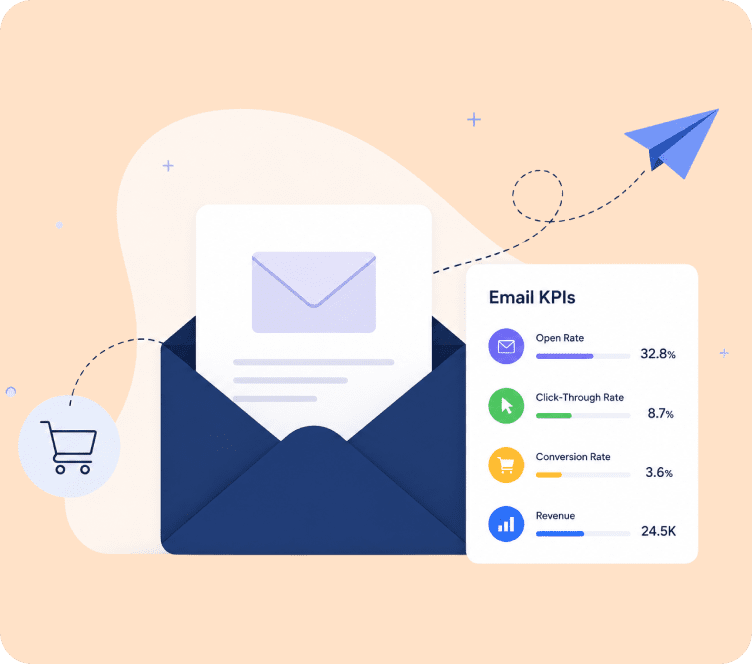
Open rate alone won’t tell you if email marketing is actually working for your store. With Apple’s Mail Privacy Protection inflating opens for a large share of most lists, it’s a weaker signal than it used to be.
Focus on:
- Click-to-open rate, which shows how compelling your content was to people who already opened
- Conversion rate, which connects clicks to actual purchases
- Revenue per email, which tells you the real dollar value of a send, not just how many people glanced at it
Check these weekly at minimum. A small business that reviews its numbers regularly catches a broken flow or a dropping engagement trend in days instead of months.
Where Small Businesses Usually Slip Up
Most of what goes wrong with email marketing for small business owners isn’t complicated to fix, it’s just easy to overlook when you’re busy running the store itself.
- Sending too rarely, then blasting hard around big sales. Consistency beats occasional bursts of activity, since a list that never hears from you forgets who you are.
- Never cleaning the list. Sending to subscribers who haven’t opened anything in 90+ days drags down every metric and increases the odds of landing in spam.
- Treating every email as a sales pitch. A list that only hears “buy now” eventually stops listening. Mix in genuinely useful or interesting content between offers.
- Ignoring mobile rendering. A broken layout on the device most people are actually using is one of the fastest ways to lose a click.
- Skipping automation because it feels technical. Welcome series and abandoned cart flows are usually the easiest wins on this entire list, and the ones most small businesses put off the longest.
Where Adflipr Fits Into This
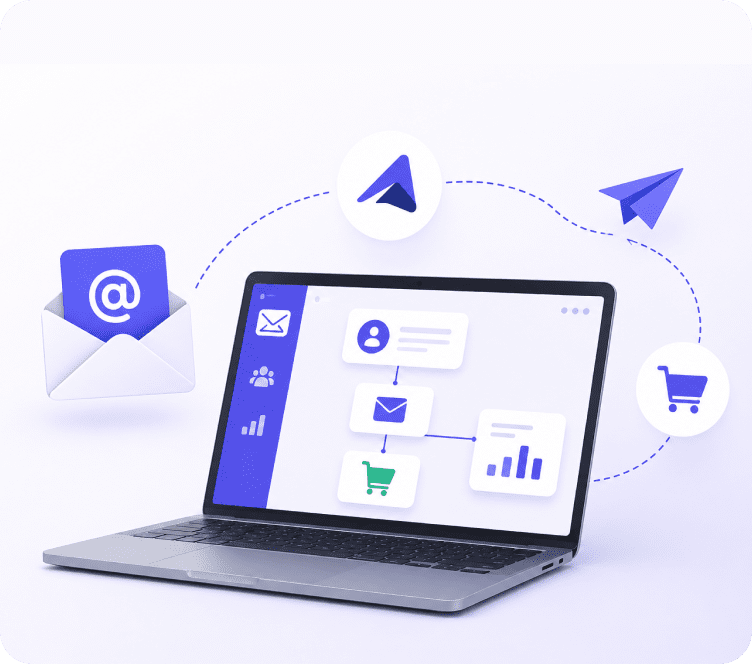
Every tip above gets easier when your email platform is actually built for ecommerce instead of general marketing. Adflipr connects directly to Shopify and WooCommerce, so segmentation, abandoned cart recovery, and post-purchase automation run off your real store data instead of guesswork.
With Adflipr, a small business can:
- Set up welcome, abandoned cart, and post-purchase flows without needing a developer
- Segment customers by actual purchase behavior, not just email engagement
- See revenue tied directly to each campaign and flow, not just opens and clicks
- Pay based on active contacts, so a growing list of unengaged addresses doesn’t quietly inflate your bill
It’s built for stores that want email marketing to actually drive sales, not just look busy in an inbox. Following email marketing best practices for small business owners, like the segmentation and automation covered above, tends to compound once the right platform is doing the heavy lifting behind the scenes.
Key Takeaways
Small business email marketing works best when it’s specific, automated where possible, and reviewed regularly. If you’re still figuring out how to grow business with email marketing this year, automation and segmentation give you the fastest return for the least ongoing effort. The businesses seeing strong returns aren’t necessarily sending more emails, they’re sending smarter ones to the right segments at the right moments.
- Own your list. Build it with real value exchanges, never buy one.
- Segment before you send. Different customers deserve different messages.
- Automate the big three. Welcome, abandoned cart, and post-purchase flows carry a disproportionate share of revenue.
- Design for mobile first. That’s where most people are actually reading.
- Personalize with real data, not just a first name in a subject line.
- Test instead of guessing. Your list is unique, and generic best practices only get you so far.
- Track revenue metrics, not just opens, to know what’s actually working.
Start with whichever tip addresses your biggest current gap, usually automation if you don’t have it yet, and build from there. A solid small business email marketing strategy doesn’t need all ten tips running perfectly on day one, it just needs to start somewhere and improve steadily.
Start Free with Adflipr and set up ecommerce-focused email marketing built for Shopify and WooCommerce stores.
FAQs
How much should a small business actually spend on email marketing?
Most small businesses spend somewhere between $50 and $200 a month on email software, which makes it one of the most affordable channels available relative to its return. The bigger cost is usually time, not money, which is why automation matters so much for smaller teams without a dedicated marketing hire.
Is email marketing still worth it for a small business in 2026?
Yes, and the data backs this up clearly. Email marketing continues to deliver a higher average return than any other digital channel, and for ecommerce specifically that return tends to run even higher than the general average. Following basic email marketing best practices for small business owners, like segmentation and automation, tends to compound that return even further. If anything, it’s become more valuable as paid ad costs on other channels have climbed.
How often should a small business actually send marketing emails?
Most ecommerce businesses see the best results sending somewhere between one and four emails a week, though this varies by audience and how much genuinely useful content you have to share. The bigger risk isn’t sending too often, it’s sending inconsistently and then disappearing for a month before a big sale.
What’s the fastest email marketing tip a small business can actually implement this week?
Of all the email marketing tips for small business owners on this list, setting up an abandoned cart recovery sequence is usually the quickest win with the clearest payoff, since it’s a one-time setup that keeps recovering revenue automatically afterward. Most Shopify and WooCommerce-focused platforms, including Adflipr, can get a basic version running in under an hour.
Do small businesses need a big email list to see results?
No. A smaller, engaged list of a few hundred genuinely interested subscribers will consistently outperform a large list full of people who never open anything. These small business email marketing tips work the same whether your list has 200 people or 20,000, focus on list quality and segmentation before worrying about overall size.
What email marketing mistake costs small businesses the most revenue?
Skipping automation is usually the biggest one, and it’s the mistake that shows up first in almost every list of email marketing tips for small business owners. Manually sending every welcome email or cart reminder is not sustainable for a small team, and without automation, most of that potential revenue simply never gets captured in the first place.
Can a small business run effective email marketing without a big marketing team?
Yes, and this is actually where automation earns its keep. Once welcome, abandoned cart, and post-purchase flows are built, they keep running without daily attention, which means a one-person team can maintain a program that would otherwise require ongoing manual work. It’s one of the most realistic answers to how to grow business with email marketing when you don’t have a dedicated hire.