
Nearly 7 out of every 10 online shoppers add something to their cart and then leave without buying. That is not a small leak in your funnel, that is most of your potential revenue walking out the door every single day. So here is the real question worth asking. Is your store just sending emails, or is it actually reacting when a customer shows you exactly what they want?
That gap between sending and reacting is the whole story behind email marketing vs marketing automation. A lot of tools blur the two together in their messaging, which makes it confusing to know what you actually need for your Shopify or WooCommerce store.
Here is the short version. Email marketing is about sending campaigns. Marketing automation is about building workflows that respond to what your customers do, without you lifting a finger every time. Most growing ecommerce stores need both, just in different amounts depending on where they are.
In this guide, we will break down the real difference between email marketing and marketing automation, back it up with real industry data, show you how each one plays out in an actual Shopify or WooCommerce store, and help you figure out what your business needs right now instead of six months from now. If you want to see how this works in practice, Adflipr’s email marketing platform for Shopify and WooCommerce is built around exactly this idea.
What Is Email Marketing?
Email marketing is the practice of sending planned messages to your subscriber or customer list to promote products, share updates, or build a relationship with your audience.
Think of your typical Friday sale email, a new arrivals announcement, or a monthly newsletter. You write it, you pick your audience, you hit send. Everyone on that list gets the same message at the same time, unless you have set up basic segmentation.
Email marketing usually covers:
- Building and cleaning your subscriber list
- Designing and writing campaign emails
- Sending broadcasts to your full list or a segment
- Basic list segmentation for ecommerce, like tagging VIP customers or past buyers
- Tracking opens, clicks, and revenue from each send
For a lot of small stores, this is where email starts. And honestly, email marketing for Shopify works well when your list is small and your product catalog is simple. The problem shows up when your store grows and one-size-fits-all emails stop matching what different customers actually want.
What Is Marketing Automation?
Marketing automation is a system that triggers personalized messages on its own, based on a customer’s behavior, without you manually sending anything.
Instead of you deciding when to hit send, the system watches for a signal, like someone abandoning their cart, browsing a product page twice, or placing their first order, and it reacts on its own. The email or workflow fires the moment that signal happens. This is what most people mean when they search for marketing automation for ecommerce specifically, tools built to react to store activity, not just send a scheduled blast.
Marketing automation usually covers:
- Behavior-based triggers, like abandoned cart recovery or browse abandonment
- Multi-step customer journeys, not just single emails
- Advanced segmentation based on purchase history, engagement, or customer lifetime value
- Cross-channel touchpoints across email and other channels as a customer moves through your store
- Lead scoring or customer scoring to identify your highest-value shoppers
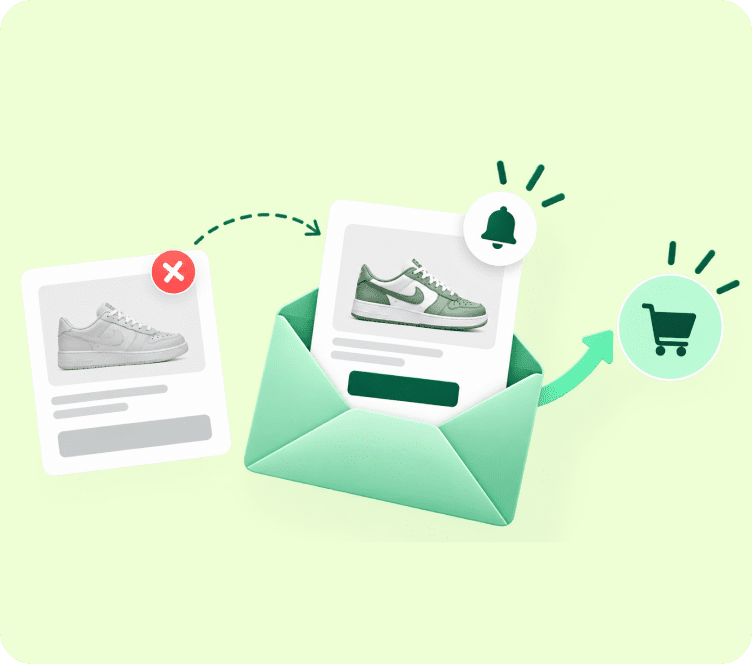
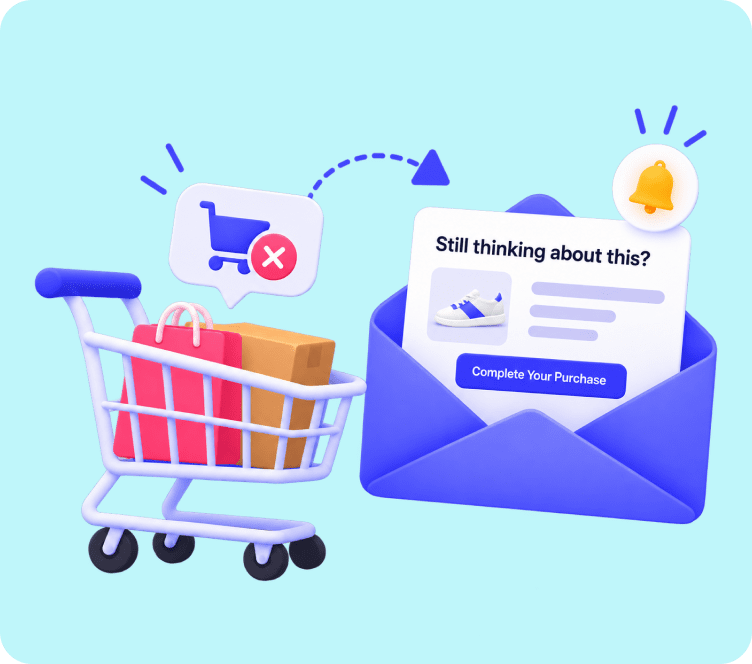
This is the layer that keeps working while you sleep. A customer adds a hoodie to their cart at 11pm and leaves. Twenty minutes later, a reminder email goes out on its own. No one on your team touched it.
Email Marketing vs Marketing Automation: The Core Differences
Both use email as a channel. Both aim to grow revenue. But they run on completely different logic. Here is a side-by-side breakdown.
| Factor | Email Marketing | Marketing Automation |
|---|---|---|
| Trigger | Manual, scheduled by you | Behavior based, triggered by the customer |
| Scope | Mostly email only | Email and other connected touchpoints |
| Personalization | Basic, name or segment level | Deep, based on browsing and purchase behavior |
| Timing | Fixed send times | Real-time, triggered instantly |
| Data used | Email engagement only | Full customer journey and store activity |
| Best for | Promotions, newsletters, announcements | Cart recovery, welcome series, post-purchase flows |
| Setup effort | Low, build once and send | Higher upfront, but runs on its own after |
What the Numbers Actually Show
This is the part most comparison articles skip, and it is the part that matters most if you are deciding where to spend your time. Here is what recent ecommerce data actually shows.
- Behavior-based emails outperform regular campaigns by a wide margin. Recent ecommerce benchmark data shows automated sends get roughly 52% higher open rates, over 300% higher click rates, and a conversion rate that is several times higher than standard one-off campaigns.
- Segmentation multiplies results. Properly segmented campaigns can generate several times more revenue than sending the same message to your entire list.
- A small number of emails carry most of the revenue. In a mature email program, workflows like welcome series, cart recovery, and post-purchase sequences typically make up only a small share of total emails sent, but they generate close to half of all email revenue.
- Cart abandonment is still massive. Industry benchmarks put the global cart abandonment rate above 70%, which is exactly why a well-timed recovery sequence has such a big impact.
In plain terms, a handful of behavior-based emails are doing more financial work than dozens of manual campaigns combined. That is exactly why the email marketing vs marketing automation question is less about picking a side and more about knowing where to focus your energy first.
Why the Data Difference Matters
Email marketing tools usually only know what happened inside an email, like whether someone opened it or clicked a link. Marketing automation platforms connect directly to your Shopify or WooCommerce store, so they know what someone browsed, what they bought before, how much they have spent, and whether they abandoned a cart last Tuesday.
That extra layer of data is exactly what makes behavior-based flows convert better than one-off campaigns. You are not guessing what a customer wants. You are reacting to what they already showed you.
Why the Timing Difference Matters
A broadcast email goes out on your schedule. A cart recovery sequence goes out on the customer’s schedule. If someone is ready to buy right now and gets a reminder within the hour instead of your next scheduled newsletter three days later, you have a much better shot at recovering that sale. Industry benchmarks put the global cart abandonment rate above 70 percent, and well-timed abandoned cart recovery emails are consistently the single highest-converting sequence ecommerce stores run.
How Email Marketing and Marketing Automation Work Together
Here is the thing most comparison articles get wrong. They frame this as an either-or decision. In real ecommerce stores, it never works that way, and framing it as marketing automation vs email marketing misses the point entirely.
Picture your store’s email strategy as two layers stacked on top of each other.
The campaign layer is your email marketing. This is your Black Friday blast, your new collection launch, your weekly newsletter. It drives spikes in traffic and sales around specific moments.
The behavior layer runs quietly underneath, all the time. A welcome email series for new subscribers. Abandoned cart recovery. Post-purchase follow ups. Win-back sequences for customers who have not ordered in 90 days. All of these run as pre-built automation workflows rather than something you build from scratch.
Most established Shopify and WooCommerce stores find that these behavior-based sends, even though they represent a small percentage of total emails sent, generate a disproportionate share of email revenue. That is because they hit customers at the exact moment of highest intent, right after they showed interest or made a purchase.
This is exactly why a platform like Adflipr is built around both layers together instead of treating them as separate products. You get campaign sending for your promotions and store-wide announcements, plus behavior-based sequences for cart recovery, welcome flows, and post-purchase emails, all connected to your actual store data.
Real Ecommerce Examples: Campaigns vs Automation in Action
Shopify Example
Say you run a skincare brand on Shopify. You send a campaign email announcing a new serum launch to your full list. That is email marketing. Everyone gets the same message.
Now, three customers behave differently after that email. One buys immediately. One adds the serum to their cart but does not check out. One clicks through but leaves without adding anything.
With a connected system watching your Shopify store, each of these customers can get a different follow-up. The buyer gets a post-purchase email with usage tips and a review request. The cart abandoner gets a reminder with their exact product still shown, maybe with a small incentive on the second email. The browser gets a soft nudge highlighting the serum’s key ingredient benefits.
One campaign email. Three different automated paths. That is the difference in action.
WooCommerce Example
A home goods store on WooCommerce sends a monthly newsletter featuring bestsellers. That is a straightforward email marketing send.
Behind the scenes, the store also runs WooCommerce email automation connected to its store data. A customer who bought a dinner set two months ago automatically receives a “complete the set” email showing matching glassware, timed to when repeat purchases in that category typically happen. Another customer who has not opened an email in 60 days enters a re-engagement sequence with a different subject line style to try to win back their attention.
The newsletter reaches everyone at once. The behavior-based system reaches each person at the moment that actually matters for them.
Which One Does Your Store Actually Need?
This depends mostly on where your store is right now, not on which tool has the fanciest features.
If you are just starting out, focus on email marketing first. Get your welcome popup working, build your subscriber list, and send consistent campaigns. You need a foundation before any workflow has anything meaningful to work with.
If you have steady traffic and repeat customers, this is when marketing automation starts paying for itself fast. Abandoned cart recovery alone often recovers a noticeable chunk of otherwise lost revenue. A welcome series converts new subscribers into first-time buyers far better than a single introductory email.
If you are scaling across multiple product lines or a larger customer base, you need both working together, with proper segmentation so your VIP customers, one-time buyers, and window shoppers are not all getting identical treatment. This is really where marketing automation for ecommerce earns its keep, since a bigger customer base means more behavior worth reacting to.
The honest answer for most Shopify and WooCommerce stores past their first few months is that you need behavior-based sequences built on top of solid email marketing fundamentals. Not one instead of the other.
Best Practices for Combining Both
Start with the three highest-impact workflows. Welcome series, abandoned cart recovery, and post-purchase are the sequences that consistently deliver the best return for ecommerce stores. Get these right before building anything more complex.
Segment before you automate. Sending the same abandoned cart email to a first-time visitor and a repeat VIP customer wastes the whole point of a behavior-based system. Group customers by purchase history, spend level, or engagement first.
Keep your campaign calendar and your workflows in sync. If you are running a site-wide sale campaign, make sure your triggered sequences are not contradicting the offer or confusing customers with mismatched pricing.
Use real store data, not guesswork. Connect your platform directly to your Shopify or WooCommerce store so triggers are based on actual browsing and purchase behavior, not assumptions.
Review flow performance monthly. An abandoned cart sequence that worked well six months ago might need a subject line refresh or a new incentive structure as customer behavior shifts. Keep an eye on the email marketing KPIs that actually matter so you know what to fix first.
Common Mistakes to Avoid
Treating every subscriber the same. This is the single biggest reason behavior-based sequences underperform. A flow built for everyone converts nobody particularly well.
Setting up a workflow and never touching it again. Sequences need occasional testing and updates. Customer expectations change, and a stale flow loses effectiveness over time.
Relying only on triggered sequences and skipping campaigns. Behavior-based emails handle the ongoing relationship, but campaigns are what create urgency around launches, sales, and seasonal moments. You need both.
Ignoring active contact billing. Many platforms charge based on total list size, even for inactive subscribers who never open anything. This quietly inflates costs. Look for platforms, like Adflipr, that bill based on active contact pricing so you are not paying for a dead list.
Overcomplicating flows too early. A ten-step sequence with complex branching sounds impressive, but a clean three-email cart recovery series usually outperforms it when you are just getting started.
Where Adflipr Fits In
Adflipr was built specifically for Shopify and WooCommerce stores that need both email marketing and behavior-based sequences working from the same data source, instead of stitching together separate tools. In other words, it is ecommerce email automation built as one product, not two bolted together.
That means your campaign sends and your triggered flows, like abandoned cart recovery, welcome series, and post-purchase sequences, all pull from the same customer and order data. Segmentation is based on real store activity. And because pricing is based on active contacts rather than your entire list size, you are not paying extra for subscribers who never engage.
If you are trying to decide between email marketing and marketing automation, the more useful question is how to set both up correctly for your specific store, without overspending on tools that were built for B2B sales teams instead of ecommerce brands. You can see how the Shopify integration and WooCommerce integration work, or talk to the team to walk through your own store’s setup.
Key Takeaways
If you only remember a few things from this guide, make it these:
- Email marketing is manual, marketing automation is behavior based. One is you hitting send, the other is your store reacting to what a customer does on its own.
- You do not have to choose between them. Most successful Shopify and WooCommerce stores run campaigns for promotions and behavior-based sequences for the everyday customer journey, at the same time.
- Triggered flows punch above their weight. A small number of workflows, like welcome series, cart recovery, and post-purchase emails, often generate close to half of total email revenue, even though they make up a fraction of total sends.
- Start with fundamentals, then layer sequences on top. New stores should focus on list building and consistent campaigns first. Once you have steady traffic and repeat customers, marketing automation for ecommerce starts paying for itself fast.
- Segment before you automate. Sending the same message to every customer wastes the entire point of a behavior-based system, whether it is manual or automatic.
- Watch how you are billed. Choose a platform, like Adflipr, that charges based on active contacts instead of your full list size, so you are not paying for subscribers who never engage.
The debate over email marketing vs marketing automation is not really about picking a winner. Email marketing gets your message out to everyone at once. Marketing automation reacts to what each customer actually does, in real time, without manual work. For most Shopify and WooCommerce stores, layering behavior-based sequences on top of consistent campaigns is what turns ecommerce email automation into one of the most reliable, cost-effective revenue channels your store has.
Ready to see it in action? Start your first workflow with Adflipr.
FAQs
What is the difference between email marketing vs marketing automation?
Email marketing is you manually sending a campaign to your list. Marketing automation sends emails on its own, triggered by what a customer does, like abandoning a cart. One is scheduled by you, the other reacts to real customer behavior in real time.
Do I need marketing automation if I already do email marketing?
Yes, if you have abandoned carts or new subscribers who never hear from you again. Email marketing alone misses these moments. Marketing automation catches them automatically, without you having to remember to follow up every time.
Which makes more money, email marketing or marketing automation?
Marketing automation usually earns more per email since it targets customers at their exact moment of interest. Campaigns still drive spikes around sales and launches. Most stores see the biggest revenue lift when both work together, not one instead of the other.
Is email marketing vs marketing automation relevant for small Shopify stores?
Yes. Even a small store using email marketing for Shopify can turn on a welcome email and a cart reminder sequence right away. You do not need a large list or budget, just the two or three flows that recover sales you are already losing.
Can WooCommerce stores use marketing automation the same way as Shopify?
Yes. Stores running WooCommerce email automation can set up the same cart recovery, welcome, and win-back flows as Shopify stores. The setup screens differ slightly since WooCommerce runs on WordPress, but the strategy is identical.
Is marketing automation expensive for small ecommerce businesses?
It depends on the platform. Many tools charge for your entire contact list, including inactive subscribers. Adflipr charges based on active contacts only, which keeps costs lower for small and growing stores compared to per-contact pricing models.
Should I use one platform for both email marketing and marketing automation?
Yes. One platform keeps your customer data in one place and makes segmentation more accurate. Running two separate tools often causes data sync issues, which is why most ecommerce brands use a single platform for both.