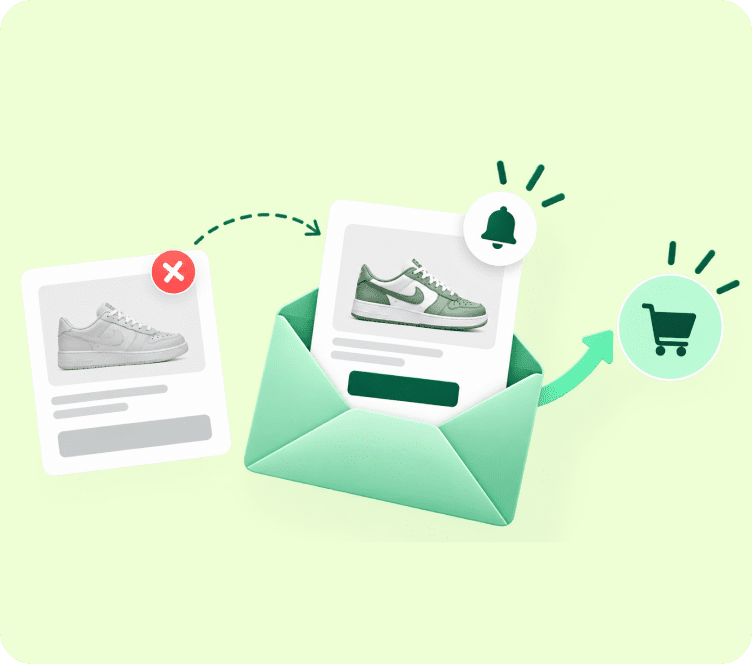
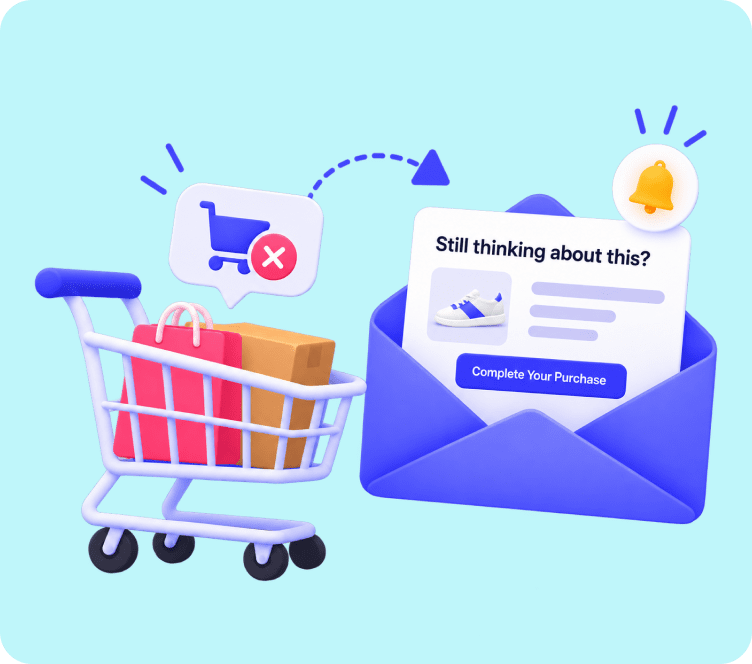
A meaningful share of subscription cancellations aren’t a decision at all, they’re a technical failure. A card expires, a bank flags a charge, a payment method quietly fails, and the customer never actively chose to leave, the subscription just stopped renewing. This is a mechanic no one-time-purchase business ever has to deal with, since a single sale either completes or it doesn’t, but a subscription depends on the same payment succeeding again and again, indefinitely.
Email marketing for subscription businesses has to treat failed payment recovery as one of its most important jobs, not an afterthought bolted onto billing. Good subscription brand email marketing also recognizes that a subscription can be canceled at any moment, unlike a one-time purchase, which makes proactive churn prevention and ongoing value reinforcement genuinely central to the whole relationship, not optional extras. Below is how failed payment recovery works, how churn gets addressed before cancellation rather than after, and how value gets kept visible enough that nobody questions why they’re still paying.
Some cancellations aren’t decisions, payment failures can cause unintended cancellations.
The relationship is always renewing, subscriptions depend on repeated successful payments.
Cancellation is always one click away, subscribers can leave at any time.
Value has to stay visible, forgotten value quickly leads to cancellation.
A Real Share of Churn Has Nothing to Do With Satisfaction
Most retention advice focuses on keeping customers happy, which matters, but misses an entirely separate churn cause unique to recurring billing: a payment simply failing to process, for reasons that have nothing to do with whether the customer wants to stay.
A subscriber who loves the product can still lose access simply because their card expired and nobody told them in time, which makes this one of the most preventable, and most commonly ignored, sources of subscription churn.
Fixing this isn’t about winning back an unhappy customer, it’s about catching a purely technical failure before it silently ends a relationship the customer never actually chose to end.
Failed Payment Emails Catch a Technical Failure Before It Becomes a Loss
Failed payment emails work by reaching a subscriber the moment a charge fails, giving them an easy path to fix it before the subscription lapses entirely.
Notify immediately, not after several failed attempts. A prompt, clear notice the moment a payment fails gives a subscriber the best chance to fix it before access is actually lost, rather than discovering the problem only after it’s too late.
Make updating payment details effortless. A simple, direct link to update card information, rather than requiring a subscriber to log in and hunt through account settings, removes friction from what should be a thirty-second fix.
Retry intelligently, not just repeatedly. A well-timed retry sequence, spaced sensibly rather than hammering the same failed card repeatedly, gives a temporary issue, like a bank flag that clears in a day, time to resolve itself.
Churn Prevention Emails Act Before the Cancellation, Not After
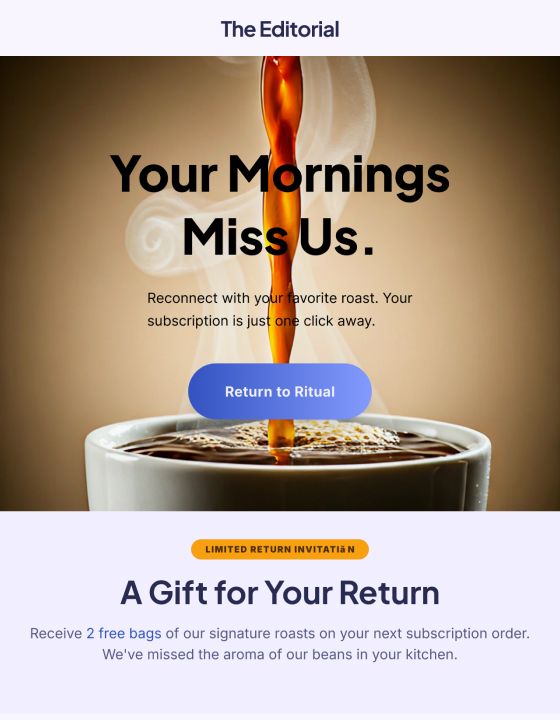
Most win-back efforts happen after someone has already left, and churn prevention emails work by acting earlier, addressing the signals that suggest someone might cancel while there’s still a real chance to change their mind.
Watch for genuine disengagement signals. A subscriber who stops opening emails or using a product feature is showing early signs worth acting on, well before they ever click cancel.
Reach out with real help, not just a discount. A genuine check-in addressing a likely reason for disengagement, rather than an automatic price cut, often does more to actually retain a subscriber than a coupon that treats the symptom instead of the cause.
Make canceling itself a conversation, not just a button. Where appropriate, a brief, low-pressure moment to understand why someone is leaving can surface a fixable issue, and even when it doesn’t prevent the cancellation, it provides real insight for reducing the next one.
Subscription Value Emails Keep the Reason for Paying Visible
A subscription is easy to forget the value of once the initial excitement fades, and subscription value emails work by keeping that value genuinely visible month after month, rather than letting the relationship run silently in the background.
Show real usage or benefit, not a generic reminder. A summary of what a subscriber actually got that month, content consumed, products received, results achieved, makes the ongoing charge feel earned rather than automatic.
Surface features or benefits that go unused. A subscriber getting only partial value from what they’re paying for is a real churn risk, and proactively highlighting an underused benefit can meaningfully increase their sense of value.
Celebrate the relationship’s milestones. Marking a subscriber’s anniversary or a meaningful usage milestone reinforces the relationship as something ongoing and valued, not just a recurring transaction nobody’s paying attention to.
How Adflipr Helps
A failed payment caught and recovered before access is lost, a disengaged subscriber reached before they cancel, real value kept visible every month: each one depends on the tool seeing real billing and engagement data, live, whether the business runs on Shopify or WooCommerce. Adflipr is built on that connection, purpose-built for subscription brand email marketing rather than adapted from a generic one-time-purchase template, with every flow on this page ready to switch on. This is what real subscription email marketing requires.
| The job | Manually or with a generic email tool | With Adflipr |
|---|---|---|
| Failed payment recovery | A generic decline notice, or no notice at all | Immediate, clear notification with an easy one-click way to fix it |
| Churn prevention | Win-back attempted only after a subscriber has already left | Disengagement signals flagged early, before cancellation actually happens |
| Value visibility | Silence between billing cycles with no reminder of value | Regular, genuine value summaries tied to real usage each cycle |
| Retry logic | Repeated charge attempts on the same failed card | Intelligent, well-spaced retries that give temporary issues time to clear |
Your monthly bill | Priced on total list size, dead addresses included | Active contact billing, so you pay for subscribers who engage |
The WooCommerce integration is native and real-time, down to product variants. And the flows above are switched on, not built.
✓ Failed payment recovery flows
✓ Proactive churn prevention
✓ Ongoing value reinforcement
✓ Active contact billing
Frequently Asked Questions
Often because of a failed payment, not an actual decision to leave. A card expiring or a bank flagging a charge can quietly end a subscription the customer never chose to cancel, which is why failed payment emails, sent immediately with an easy way to update card details, are one of the highest-leverage things good subscription email marketing can do.
By acting on early disengagement signals, not waiting until someone has already canceled. Churn prevention emails that reach out with genuine help, rather than an automatic discount, when a subscriber shows signs of drifting away, and that treat the cancellation moment itself as a chance to learn why, are far more effective than reactive win-back attempts after the fact, which is central to good subscription brand email marketing.
By showing real, specific value each cycle, not a generic reminder that the subscription exists. Subscription value emails that summarize actual usage or benefit, and that surface features a subscriber isn’t fully using, keep the ongoing charge feeling earned rather than automatic, which meaningfully reduces the quiet drift toward cancellation that comes from forgotten value.
A realistic goal for email marketing for subscription businesses is meaningfully recovered revenue from failed payments that would otherwise silently churn, plus a measurable reduction in voluntary cancellations once proactive churn signals are acted on early. Subscription email marketing built around these two mechanics typically protects more recurring revenue than any single acquisition campaign, since retaining an existing subscriber is almost always cheaper than replacing one.