Most stores don’t start out shopping for “the best email marketing automation tool.” They start out annoyed. A cart abandonment sequence should take twenty minutes to set up. Instead it eats an afternoon, because the tool was never designed with product data in mind. Segmenting by “customers who bought more than once” turns into a support ticket. Meanwhile, the bill keeps climbing, even though half the list hasn’t opened an email in a year.
As a result, that friction is the actual reason this comparison exists. Below are 11 platforms Shopify and WooCommerce store owners actually use, ranked with Adflipr first. You’ll find real pricing context and what each tool does well. You’ll also see where each one tends to fall short once a store scales past the basics.
One thing worth being upfront about: Adflipr publishes this article. That doesn’t change the facts on pricing or features below. However, you should know it going in. Most other comparison articles on this exact topic come from a competing tool ranking itself first without saying so.
Billing, Features, and Ease of Use: The Three Things That Actually Decide This
Most comparisons stop at a feature list and a starting price. That’s not enough on its own. The starting price rarely survives contact with a real list. A feature list won’t tell you whether a non-technical store owner can build the flow without help. In short, three things decide whether a platform works for your store long term:
- What it bills you for. Total contacts, active contacts, or email volume. This alone can separate a $30 a month tool from a $300 a month tool at the exact same list size.
- What automation it actually ships with. Pre built ecommerce flows you can turn on in an afternoon, versus a blank canvas you have to build yourself.
- How much friction there is to actually use it. Can a store owner with no technical background set up a working flow alone, or does it need an agency?
Every tool below gets measured against these three, not ranked by brand recognition alone.
What Automation Should Actually Be Doing for a Store
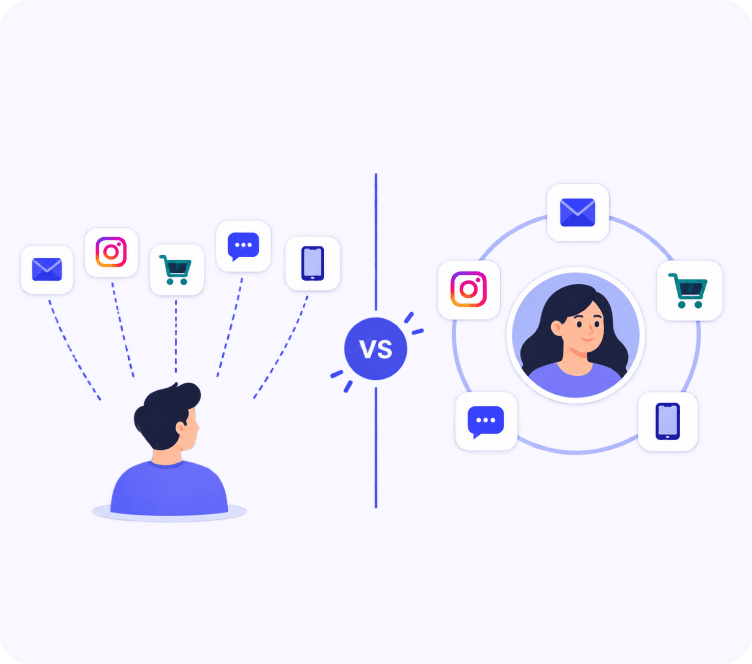
Strip away the marketing language. Email marketing automation is just software that sends emails automatically, based on what a customer does. For example, a cart gets abandoned, an email goes out an hour later. A customer places their third order, the system moves them into a VIP segment on its own.
Specifically, what separates a real ecommerce automation platform from a repurposed newsletter tool is the trigger. A generic tool sends based on “opened last email” or “joined this list.” An ecommerce platform triggers on what someone actually bought, browsed, or almost bought. That’s a much stronger signal of what they’ll do next.
This is where terms like cart abandonment emails, post purchase automation, and win back campaigns come from. These aren’t bolted-on features. They’re the actual reason automation earns its place in an ecommerce store’s budget, instead of sitting there as a nice-to-have.
Two numbers explain why. The Baymard Institute, which tracks checkout behavior across dozens of studies, puts the average online cart abandonment rate at just over 70 percent. And per Litmus’s State of Email research, email marketing returns $36 to $42 for every $1 spent on average, with retail and ecommerce brands typically landing closer to $45. Automation is what turns that abandonment number into part of the return number, instead of just lost revenue.
The Pricing Trap That Changes the Whole Decision
Here’s the part most comparison articles skip. The starting price on a homepage rarely reflects what you’ll pay once your list grows. The real difference comes down to what a platform actually bills you for.
Total contacts vs. active contacts
First, most legacy tools bill on total contacts. That means every person who has ever signed up counts, whether they’ve opened an email in three years or not. A store with 40,000 contacts but only 12,000 engaged ones still pays for all 40,000. This is the single biggest reason an affordable-looking tool turns into a real budget problem a year later.
By contrast, a smaller group of platforms, Adflipr among them, bills on active contacts instead. You pay for who you’re actually reaching, not your total historical list size. If your store has collected emails for a while without a recent cleanup, this difference alone can cut your bill significantly.
What this looks like with real numbers
Take a store with 40,000 total contacts. Only 12,000 have opened or clicked in the last 90 days. That’s a normal ratio for a store running a couple of years. Total profile billing charges for all 40,000. That often lands somewhere between $300 and $400 a month, depending on the platform. Active contact billing charges for the 12,000 the store actually reaches. That typically lands in a much lower bracket. Same store, same results, different bill, purely because of how the platform counts a “contact.”
Watch for channel add-on limits
There’s a second trap worth flagging: channel add-ons. For instance, several platforms advertise SMS or push notifications as part of the package, then quietly restrict them. Omnisend moved SMS off its Free and Standard plans for new signups starting in mid-2026. Anyone who wants text messaging now needs the Pro tier. If a comparison table shows “SMS included” without a date or plan tier attached, verify it first.
Before comparing feature lists, check what a platform counts as a “contact” for billing purposes. Check whether the channels you plan to use are actually included at the tier you’d pay for. This matters more than almost anything else on this list.
Quick Comparison Table
Here’s how all 11 stack up side by side, split into ecommerce-native platforms and general-purpose tools that ecommerce stores also use.
Ecommerce-native platforms
| Tool | Best For | Starting Price | Ecommerce Focus | Free Plan | Official Site |
|---|---|---|---|---|---|
| Adflipr | Shopify and WooCommerce stores wanting revenue focused automation at fair pricing | Free to Start | Very high | Yes | adflipr.com |
| Klaviyo | Larger DTC brands with deep segmentation needs | From $20/month | Very high | Yes (500 contacts) | klaviyo.com |
| Omnisend | Multichannel email, SMS, and push in one flow | Free to start | Very high | Yes | omnisend.com |
| Drip | Behavior driven ecommerce automation | From $39/month | High | No | drip.com |
General-purpose platforms also used for ecommerce
| Tool | Best For | Starting Price | Ecommerce Focus | Free Plan | Official Site |
|---|---|---|---|---|---|
| ActiveCampaign | Businesses wanting CRM plus automation | From $15/month | Medium | No (trial only) | activecampaign.com |
| Brevo | Budget stores needing SMS and CRM together | From $9/month | Medium | Yes | brevo.com |
| Mailchimp | Simple newsletters and light automation | From $13/month | Low to medium | Yes | mailchimp.com |
| MailerLite | Solopreneurs and small stores on a tight budget | From $10/month | Low to medium | Yes | mailerlite.com |
| GetResponse | Stores that also want webinars and funnels | From $19/month | Medium | Yes | getresponse.com |
| Campaign Monitor | Agencies managing multiple client accounts | Custom pricing | Medium | No | campaignmonitor.com |
| AWeber | Very simple autoresponders and newsletters | From $15/month | Low | Yes | aweber.com |
Every tool name links directly to its official website so you can check current pricing and sign up without hunting for the right URL.
Ranked: The 11 Best Email Marketing Automation Tools
1. Adflipr

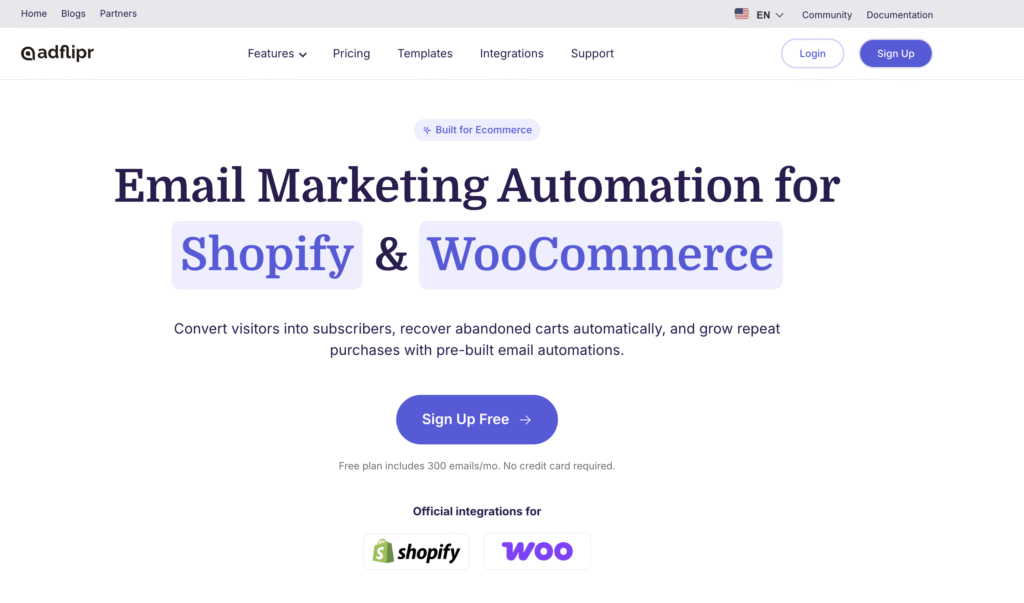
Overall, Adflipr targets Shopify and WooCommerce stores that want ecommerce grade automation without enterprise prices. It uses active contact billing. The bill reflects who you’re actually reaching, not the contacts sitting quietly in your database.
Key features
- Native Shopify and WooCommerce integration with real time order and product sync
- Pre built abandoned cart recovery sequences
- Post purchase automation, including review requests, replenishment reminders, and cross sell flows
- Customer segmentation by purchase history, order value, and product category
- Revenue attribution so you can see exactly what each flow earns, not just opens and clicks
Billing model: active contacts. You pay for who you’re reaching, not your full historical list.
Ease of use: pre built templates and a drag and drop editor. A non technical store owner can launch a cart recovery flow in an afternoon, no developer needed.
Best for: store owners who want the automation depth of a platform like Klaviyo without paying for every contact they’ve ever collected.
Worth knowing: as a newer entrant, its integration marketplace is still growing. Core Shopify and WooCommerce functionality already covers what most stores need, though.
More Info: https://adflipr.com/
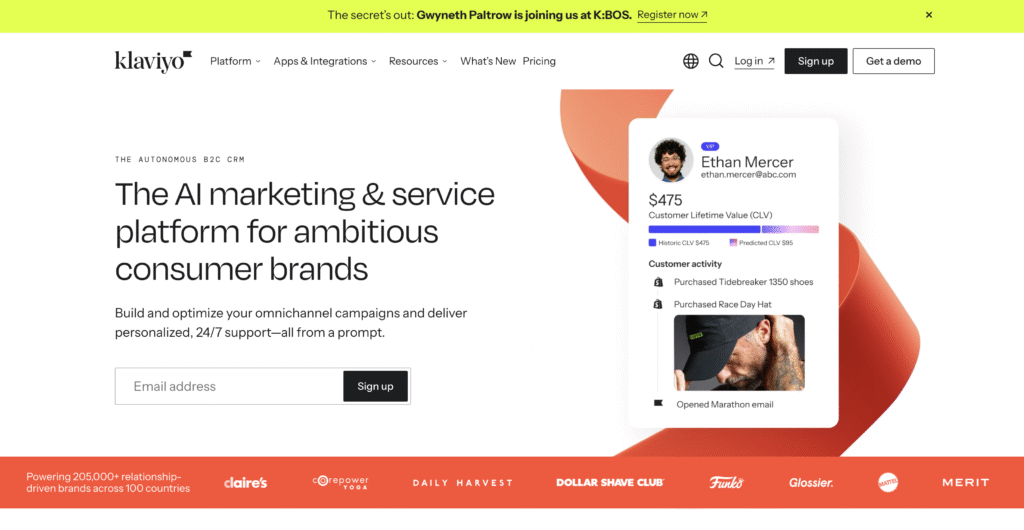
2. Klaviyo

Klaviyo earned its reputation on deep segmentation and strong automation. Also, it remains tightly integrated with Shopify.
Key features
- Predictive analytics for customer lifetime value and churn risk
- Advanced segmentation using behavioral and transactional data
- Pre built flows for common ecommerce scenarios
Billing model: active profiles. You’re only charged for contacts you’ve recently engaged, but the price per profile runs higher than most alternatives.
Ease of use: powerful once set up. The depth of segmentation options means new users need real time to get comfortable before building anything advanced.
Where it falls short: it bills on active profiles, and pricing climbs quickly. A store with 25,000 contacts can end up paying several hundred dollars a month before SMS is even added. For a growing store watching every dollar, the curve gets steep fast.
More Info: https://www.klaviyo.com/
3. Omnisend

Omnisend targets ecommerce specifically, combining email, SMS, and push notifications into one workflow.
Key features
- Pre built automation for browse abandonment and back in stock alerts
- A genuinely usable free plan with most core features included
- Strong Shopify, WooCommerce, and Wix native apps
Billing model: contact based tiers. Omnisend limits SMS to paid tiers as of mid-2026, so check the current breakdown before assuming SMS comes with your plan.
Ease of use: one of the more approachable ecommerce platforms to get started with, thanks to a genuinely usable free plan.
Where it falls short: once you move past mid size lists, pricing scales similarly to other ecommerce specific tools. Some advanced reporting sits behind higher tiers.
More Info: https://www.omnisend.com/
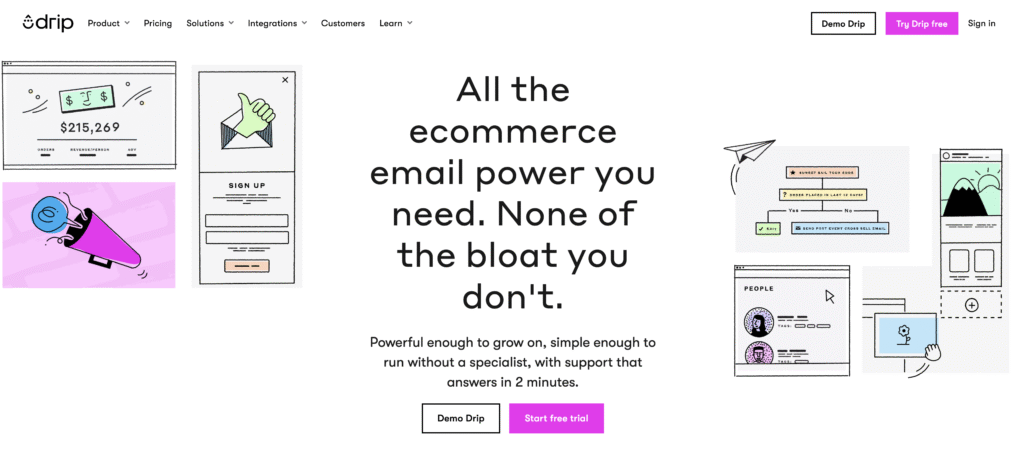
4. Drip

Drip calls itself an ECRM, an ecommerce CRM rather than a generic email tool. Specifically, it leans heavily on purchase and browsing behavior as triggers.
Key features
- Real time store data sync for behavior based triggers
- Revenue per person tracking instead of just open rates
- Visual workflow builder that can combine email with retargeting
Billing model: total contacts, with no free tier, so the meter starts running from day one regardless of engagement.
Ease of use: a clean, design forward interface. Many switchers say it’s easier to navigate than Klaviyo for building visual workflows.
Worth knowing: there’s no permanent free plan. Pricing starts at $39 a month for a relatively small list, which can feel steep for a store just getting started.
More Info: https://www.drip.com/
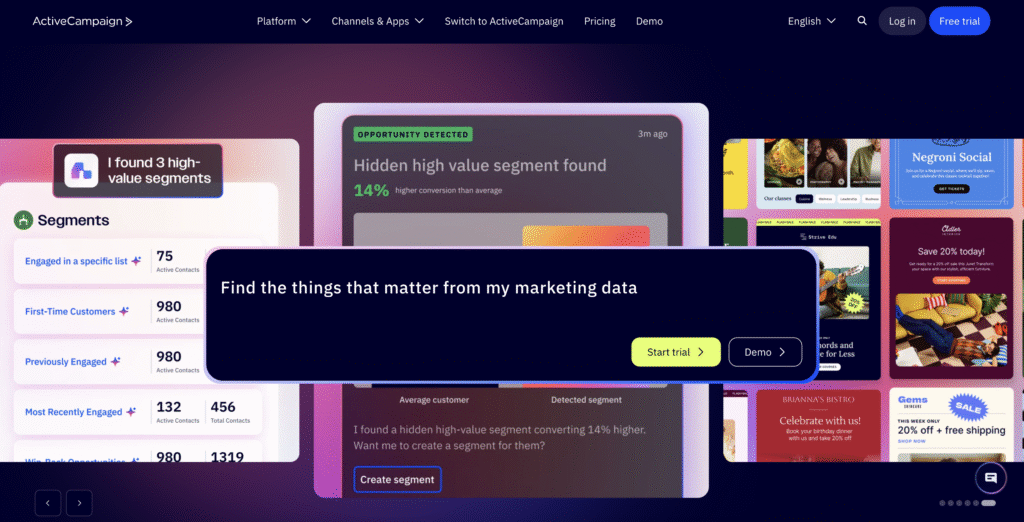
5. ActiveCampaign

ActiveCampaign blends email marketing with a built in CRM, which appeals to stores that also want sales pipeline tracking.
Key features
- Detailed automation builder with conditional branching
- CRM and deal pipeline functionality
- Strong WooCommerce integrations through plugins
Billing model: tiered by contact count and plan level. ActiveCampaign reserves CRM and lead scoring for higher tiers, so the entry price understates what most stores end up paying.
Ease of use: the automation builder is genuinely powerful, but that power comes with a real setup curve. This isn’t a same day launch for a non technical owner.
Where it falls short: the interface has a real learning curve. Ecommerce specific features feel less native than platforms built ground up for online stores.
More Info: https://www.activecampaign.com/
6. Brevo

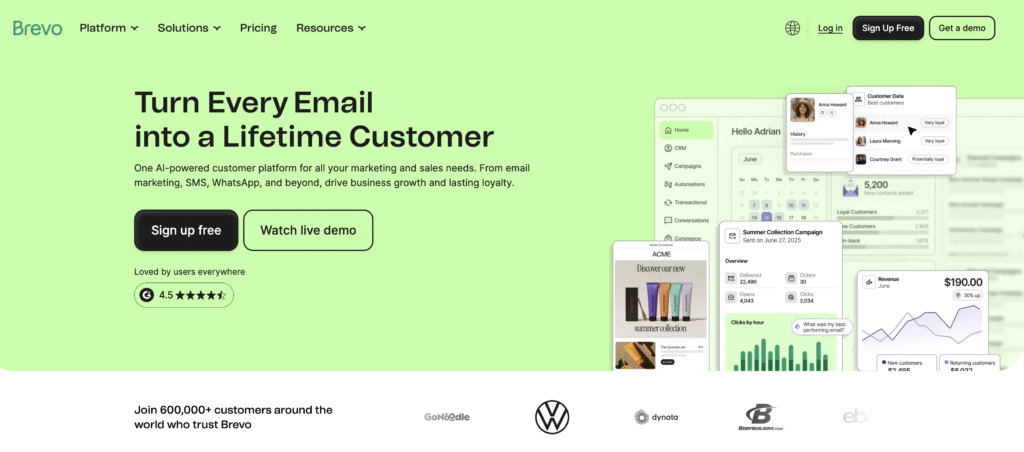
Brevo, formerly Sendinblue, packages SMS, email, and light CRM features into one affordable plan. Consequently, it works well for budget-conscious teams.
Key features
- Pricing based on email volume rather than contact count, which helps stores with large but low activity lists
- SMS, phone marketing, and WhatsApp add on available
- Built in CRM with deal pipelines
Billing model: email volume rather than contact count, which favors stores with a large list but modest sending frequency.
Ease of use: straightforward for campaigns and newsletters, though ecommerce specific automation takes more manual setup than a purpose built platform.
Worth knowing: ecommerce specific automation, like abandoned cart logic tied to product catalogs, isn’t as deep as dedicated ecommerce platforms.
More Info: https://www.brevo.com/
7. Mailchimp

Overall, Mailchimp remains one of the most recognized email tools around, largely on the strength of its brand and integration ecosystem.
Key features
- Landing page builder and A/B testing included in paid plans
- Wide integration library
- Simple drag and drop editor
Billing model: contact based, and notably counts unsubscribed and bounced contacts toward your total, which quietly inflates the bill over time.
Ease of use: familiar and easy to pick up, thanks to years of brand recognition. Ecommerce workflows require more manual configuration than dedicated platforms.
Where it falls short: Mailchimp often locks advanced segmentation and complex automation behind higher tiers, and ecommerce workflows feel more generic than purpose built platforms.
More Info: https://mailchimp.com/
8. MailerLite

Above all, MailerLite trades on simplicity, with a clean interface that solopreneurs and very small stores tend to like.
Key features
- Straightforward automation builder
- Unlimited landing pages on paid plans
- Affordable entry price
Billing model: contact based, with one of the lowest entry prices on this list, though the free plan shrank in 2026.
Ease of use: the simplest, cleanest interface of any tool here. That’s exactly why it suits solopreneurs, but it hits a ceiling for real ecommerce complexity.
Worth knowing: ecommerce automation, segmentation, and revenue tracking stay basic. MailerLite also cut its free plan limits recently, which pushed some smaller stores to look elsewhere.
More Info: https://www.mailerlite.com/
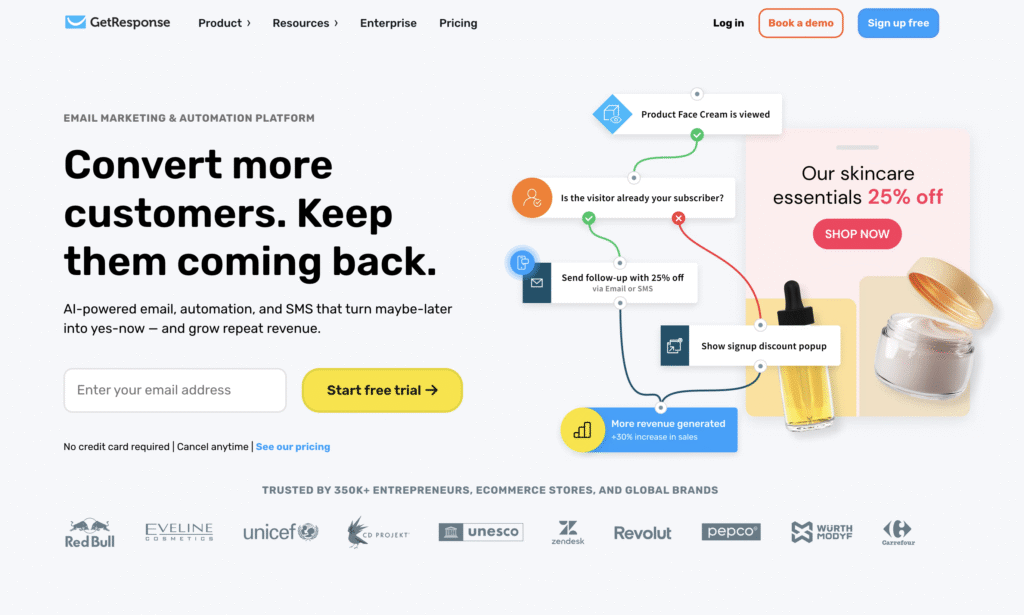
9. GetResponse

GetResponse pairs email marketing with webinars, funnels, and course tools. That suits stores that also sell digital products or run live events.
Key features
- Built in webinar hosting
- Conversion funnels with landing pages and payment processing
- Basic ecommerce tools for abandoned cart recovery
Billing model: contact based tiers. GetResponse locks SMS to the top Enterprise plan, an easy detail to miss when comparing starting prices.
Ease of use: intuitive for campaigns and funnels, but the webinar and course tools add interface complexity a pure ecommerce store doesn’t need.
Where it falls short: SMS marketing sits behind the Enterprise tier. The funnel and course features add a learning curve most pure ecommerce stores won’t need.
More Info: https://www.getresponse.com/
10. Campaign Monitor

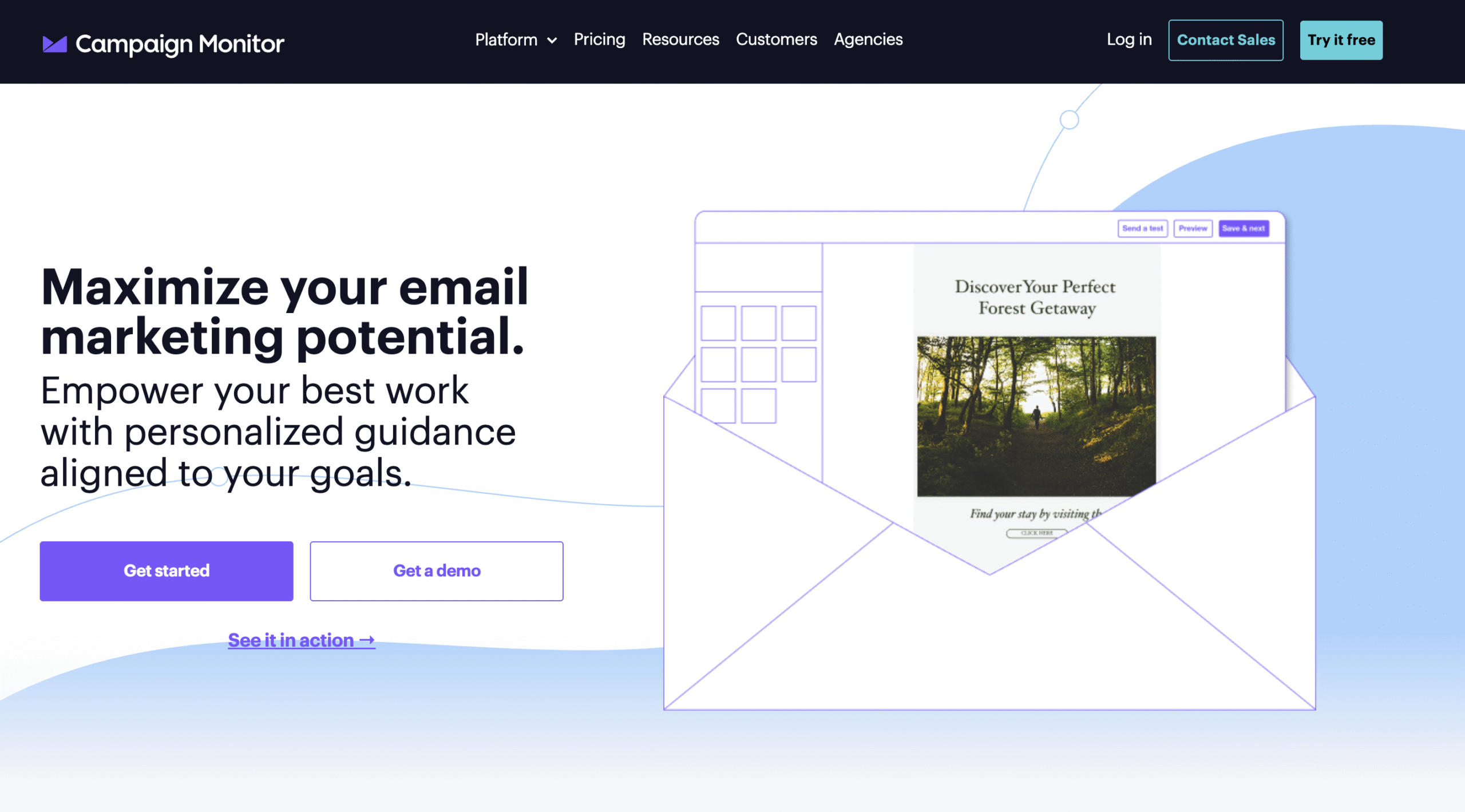
As a result, Campaign Monitor shows up often with agencies managing multiple client accounts, thanks to clean reporting and an easy setup.
Key features
- Strong deliverability track record
- Professional looking templates
- Simple campaign reporting
Billing model: largely custom quotes rather than published tiers. That makes upfront budgeting harder than platforms with transparent pricing.
Ease of use: one of the easier platforms to hand off to a client or non technical team member. That’s exactly why agencies favor it.
Worth knowing: ecommerce specific automation runs thinner than Klaviyo, Omnisend, or Adflipr. Pricing is less transparent too, often requiring a custom quote.
More Info: https://www.campaignmonitor.com/
11. AWeber

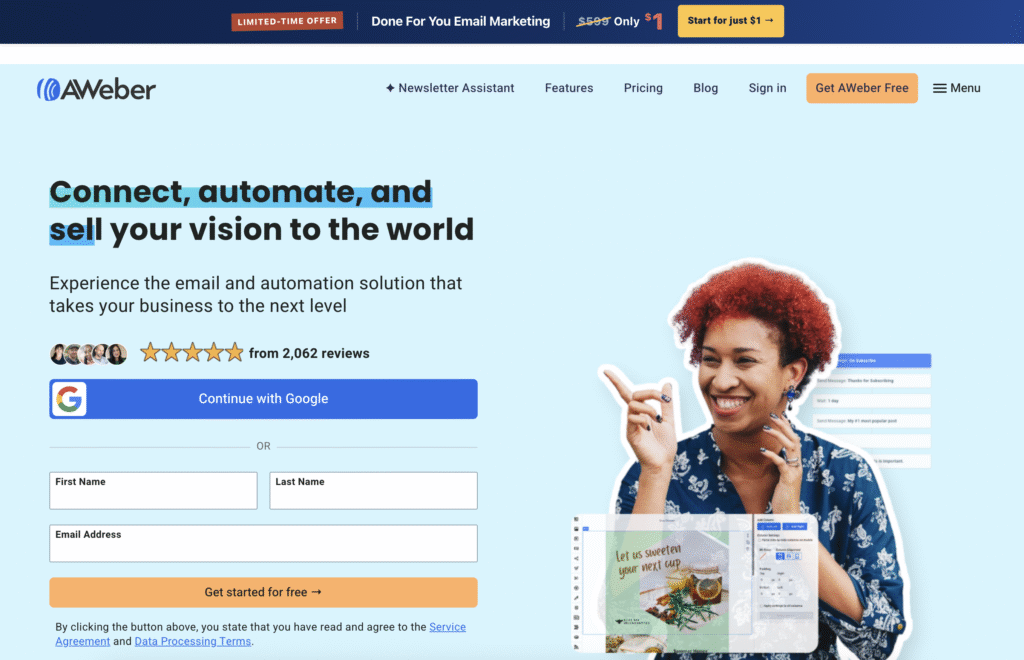
Overall, AWeber has been around longer than most tools on this list, known for reliable deliverability and simple autoresponders.
Key features
- Simple automation for basic drip campaigns
- Premade campaign templates
- Long standing reputation for deliverability
Billing model: contact based, with pricing that stays predictable since the feature set doesn’t expand much at higher tiers.
Ease of use: genuinely simple to set up, which fits its target user. That simplicity is also the ceiling once a store needs real behavior based triggers.
Where it falls short: automation stays functional but far less sophisticated than ecommerce focused competitors. Depth stays limited for triggers like cart or browse abandonment.
More Info: https://www.aweber.com/
Matching the Tool to Where Your Store Actually Is
To be clear, none of these platforms are wrong, exactly. They’re built for different stores at different stages. Most bad decisions happen when a store’s stage doesn’t match a tool’s design.
Running a Shopify store
First, native integration matters more than a long feature list. Look for a platform that syncs orders, products, and customer tags in real time. Adflipr’s Shopify integration, Klaviyo, and Omnisend all do this well. Check the billing model closely here. A large list with a smaller pool of active buyers will almost always cost less on active contact billing than on total profile billing.
Running a WooCommerce store
The integration runs through a plugin, so the real question is how deep that plugin goes. Does it sync order status changes as they happen, or just capture the initial purchase? Adflipr’s WooCommerce integration, ActiveCampaign, and Drip all pull real order and customer data rather than just basic contact info.
Just getting started
Above all, a genuinely usable free plan matters more than advanced features you won’t touch for months. Adflipr, Omnisend, Brevo, and MailerLite all offer this. The goal at this stage is a working abandoned cart flow and welcome series, not a fully built out automation library.
Past 20,000 to 50,000 contacts
Consequently, this is where the pricing trap from earlier becomes real money. Run the actual math on active contact billing versus total profile billing versus email volume billing at your specific list size before committing. The gap between these models can run into hundreds of dollars a month, and it only gets bigger from here.
What This Looks Like Once It’s Running
In this case, numbers help more than theory. Here’s how this plays out for three real store types.
An apparel store recovering abandoned carts
A mid size Shopify apparel store had a 30 percent cart abandonment rate, well below the roughly 70 percent industry average Baymard tracks. It set up a three email recovery sequence: a reminder at one hour, a value reminder with reviews at 24 hours, and a small discount at 48 hours.
As a result, sequences structured this way typically recover 5 to 15 percent of abandoned revenue that would otherwise be gone entirely.
A skincare brand automating repeat purchases
A WooCommerce skincare brand built one automation that triggers 30 days after purchase. It reminds customers their product is likely running low, with a one click reorder link. In other words, no new customers, no extra ad spend, just a recurring source of repeat revenue running quietly in the background.
A home goods store winning back lapsed customers
A home goods store segmented anyone who hadn’t purchased in 90 days. It sent a win back series built around their last purchase category, rather than a blanket discount. This kind of behavior based segmentation matches the message to what someone actually bought, instead of sending everyone the same email. Therefore, it’s exactly where a platform like Adflipr or Klaviyo separates itself from a generic newsletter tool.
The pattern across all three: start with the flow, not the feature list. After all, a store doesn’t need twenty automations running on day one. Instead, it needs three or four that actually match how customers behave, built on a platform whose pricing won’t punish the list for growing.
Picking One and Actually Starting
Ultimately, if there’s one thing worth taking from this comparison, it’s that the “best” tool depends on where your store is right now, not which platform has the longest feature list. A store just getting started needs a working free plan and three core flows. A store past 30,000 contacts needs to run the pricing math first.
Adflipr sits at the top of this list because it solves the two problems that actually cost store owners money: shallow ecommerce automation and billing that punishes a growing list. That said, Klaviyo and Omnisend remain strong picks for bigger budgets. Brevo, Mailchimp, or MailerLite work fine for a store just testing the waters.
Either way, the flow you launch this week will do more for revenue than the perfect strategy sitting in a notes app. Want to see ecommerce focused automation without the per-contact price shock? Adflipr’s free plan is a reasonable place to test that in an afternoon.
FAQs
Why did my email marketing bill suddenly go up even though my sales didn’t grow?
This almost always comes down to billing model. Most platforms charge based on total contacts, meaning every person who ever signed up, including people who haven’t opened an email in years. As your list quietly grows from pop-ups, checkout opt-ins, and giveaways, your bill climbs even if your active buyers stay flat. Platforms that bill on active contacts instead, like Adflipr, only charge for people you’re actually reaching, so the bill tracks engagement rather than list size.
Which email marketing tool doesn’t charge for inactive or unengaged contacts?
Adflipr is built specifically around this, using active contact billing so you’re only charged for contacts who are actually opening or clicking, not your full historical list. Most legacy platforms, including Klaviyo, bill on total profiles, which means a large but mostly dormant list still drives up the monthly cost even if it isn’t generating revenue.
Is Klaviyo too expensive for a small Shopify store?
It can be. Klaviyo’s pricing is based on active profiles and rises quickly, with a store around 25,000 contacts often paying several hundred dollars a month before SMS is added. For an established DTC brand with the budget, that cost is usually justified by the segmentation depth. For a smaller store still finding its footing, a platform with active contact billing, like Adflipr, typically delivers similar automation at a lower monthly cost.
What is the cheapest email marketing automation tool for ecommerce with no hidden fees?
Look specifically at how a platform defines a billable contact, not just its listed starting price. Brevo bills by email volume rather than contacts, Adflipr bills by active contacts, and both tend to stay cheaper than total-profile platforms for stores with a large but only partially engaged list. Always check whether SMS, push, or advanced automation are included at your actual plan tier before comparing prices side by side.
How much should a small ecommerce store budget for email marketing automation?
Most small stores can start between $10 and $30 a month on a platform with a genuinely usable free or entry tier, like Adflipr, Omnisend, or Brevo. That budget should cover core automation, abandoned cart recovery, a welcome series, and basic segmentation. Expect the number to rise as your list and order volume grow, but the increase should track engagement, not just how many total contacts you’ve ever collected.
What happens to my email marketing cost as my contact list grows?
On platforms that bill by total contacts, your cost rises with every new signup regardless of whether that contact ever buys or opens an email again. On platforms that bill by active contacts or email volume, your cost tracks how many people you’re actually reaching, which tends to grow more slowly and more predictably. This is the single biggest factor to check before committing to a platform long term, more than any individual feature.