
Customers interact with brands through many different channels. They might discover a product on social media, visit the website on their phone and later receive an email about it.
The challenge is making all these interactions work together. If a customer gets an email about a product they already bought or sees an ad for something they already returned, the experience can feel confusing and disconnected.
This is where the difference between omnichannel and multichannel marketing becomes important. Both strategies use multiple channels to reach customers. The main difference is how those channels work together.
In this guide, we’ll explain omnichannel vs multichannel marketing in simple terms. You’ll learn how each strategy works, see practical examples and understand how to create a more connected marketing strategy with the right email marketing software.
Quick Answer: The main difference between omnichannel vs multichannel marketing is integration. Multichannel marketing uses several channels independently. Omnichannel marketing connects those channels so customers get a consistent experience across email, social media, websites, SMS and other touchpoints.
What is Multichannel Marketing?
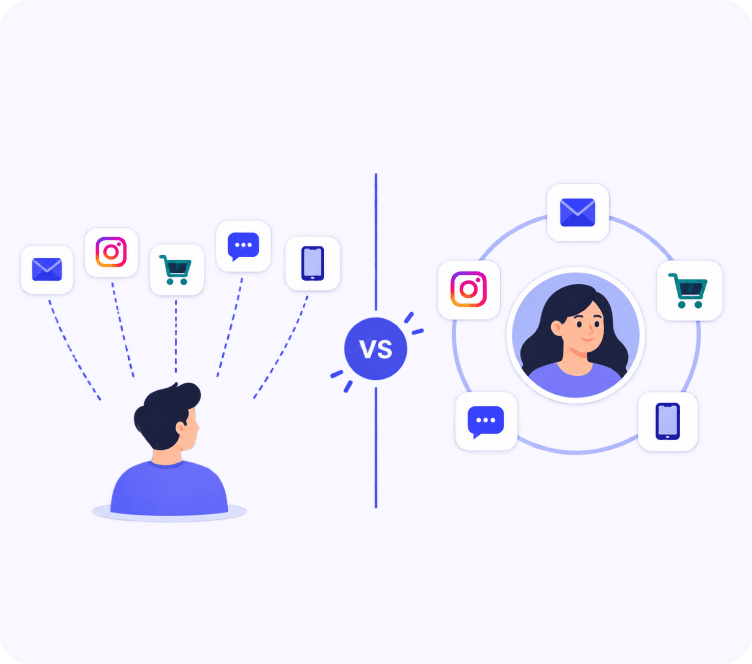
Multichannel marketing is a strategy where a brand interacts with customers across multiple separate platforms or channels. These channels often include a website, email newsletters, social media accounts, SMS messaging, and print advertising.
The defining characteristic of multichannel marketing is channel-centricity. Each channel operates independently with its own strategy, goals, and content schedule.
[ Brand Core ]
/      │      \
v       v       v
[ Email ] [ Social ] [ Ads ]
│       │       │
v       v       v
( User ) ( User ) ( User )
*Siloed Touchpoints*
Key Features of Multichannel Marketing
- Independent Channel Management: Marketing teams manage social media, email campaigns, and paid search in separate silos.
- Broad Reach: The primary goal is maximizing exposure by placing brand messages across as many platforms as possible.
- Channel-Specific Metrics: Performance success is evaluated per channel (for example, email open rates or social engagement) rather than across the full customer lifetime value.
Example of Multichannel Marketing in Action
A retail store launches a summer promotional sale. The team sends a broadcast email newsletter announcing a 20% discount code. Simultaneously, the social media team posts about the sale on Instagram, and the digital advertising team runs Google Display Ads targeting broad interest keywords.
While the consumer sees the brand in multiple places, the interactions are completely disconnected. If a customer clicks the Instagram post and asks a question about product availability, the email team has no record of that inquiry.
What is Omnichannel Marketing?
Omnichannel marketing is a customer-centric strategy that integrates all sales and marketing channels into a unified ecosystem. Instead of treating each platform as a separate message center, omnichannel marketing aligns data, messaging, and user history around the individual customer.
In an omnichannel architecture, every interaction updates the central customer profile in real time.
( Customer )
/     │      \
v      v       v
[ Email ] <---> [ SMS ]
^             ^
\           /
v         v
[ Centralized Data Hub ]
Key Features of Omnichannel Marketing
- Customer-Centric Focus: The customer sits at the center of the strategy, and channels adapt dynamically to user behavior.
- Unified Customer Data: Customer interactions across email, SMS, website visits, and purchase history sync to a single profile via a centralized contact management system.
- Contextual Messaging: Messages trigger based on specific actions, ensuring relevant communication across every platform using pre-designed email templates.
Example of Omnichannel Marketing in Action
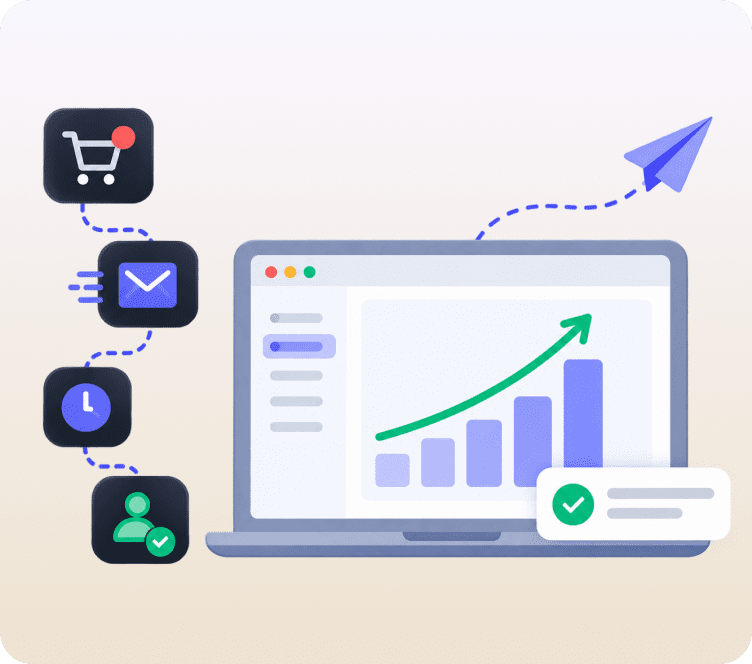
A subscriber browses an online store and adds a pair of running shoes to their shopping cart but leaves without purchasing.
- Minute 15: The system triggers an automated email using an abandoned cart recovery solution featuring the exact running shoes.
- Hour 4: If the email remains unopened, an automated SMS notification sends a limited-time free shipping offer.
- Day 1: When the customer opens the SMS and completes the purchase on their mobile device, retargeting ad campaigns automatically halt across Meta and Google Ads, preventing wasted ad spend.
Omnichannel vs Multichannel Marketing: 5 Core Differences
Understanding how these two strategies compare side by side helps growth teams allocate marketing budgets and technical resources effectively.
| Comparison Feature | Multichannel Marketing | Omnichannel Marketing |
|---|---|---|
| Core Focus | Channel-Centric (Maximizing presence on platforms) | Customer-Centric (Optimizing user experience) |
| Data Synchronization | Siloed data per department or tool | Centralized real-time data integration |
| Message Consistency | Generic broadcast messaging per channel | Contextual, behavior-driven personalized communications |
| Customer Journey | Fragmented interactions with duplicate prompts | Continuous journey across desktop, mobile, and in-person |
| Primary Goal | Increasing reach and impression volume | Driving customer retention, LTV, and conversion efficiency |
1. Channel-Centric vs. Customer-Centric Architecture
Multichannel strategies prioritize channels. Teams focus on answering: “How many emails can we send this week?” or “How many social media posts can we publish?”
Omnichannel strategies prioritize the customer experience. Teams focus on answering: “What is the subscriber’s current buyer journey stage, and which message will move them forward?”
2. Siloed Data vs. Centralized Customer Profiles
In a multichannel environment, email tools store subscriber lists, ad platforms store pixel audiences, and e-commerce software stores purchase histories independently.
Omnichannel environments connect these systems. Utilizing robust cross-channel marketing automation ensures that subscriber activity on your website immediately influences the next email or SMS message sent.
3. Broad Reach vs. Behavioral Relevance
Multichannel marketing aims to capture attention through repetition across platforms. However, without personalization, broadcast messages quickly cause subscriber fatigue and increase unsubscribe rates.
Omnichannel marketing uses behavior as a trigger. Because communications respond to real-world user activity, open rates and click-through rates rise significantly.
4. Separate Management vs. Cross-Channel Attribution
Measuring success in multichannel marketing involves comparing disconnected performance reports.
Omnichannel marketing tracks multi-touch attribution. Marketers can evaluate performance across platforms using a unified analytics and reporting dashboard to measure how an initial email open combined with a subsequent SMS reminder drove the ultimate conversion.
5. Transactional Focus vs. Long-Term Customer Retention
Multichannel marketing works well for one-time promotional pushes. However, keeping customers engaged over time requires seamless service. Omnichannel strategies yield higher retention rates because customers receive quick, relevant assistance across their preferred communication channels.
Real-World Comparison: Siloed Experience vs. Unified Journey
To illustrate the practical impact on growth metrics, examine how two different online brands handle cart recovery.
Scenario A: The Multichannel Retailer (Siloed)
- Sarah adds a laptop bag to her cart on a desktop computer but gets distracted.
- The retailer sends a generic promotional broadcast email to its entire list two days later promoting winter coats.
- Sarah visits Facebook and sees a display ad for the laptop bag she already decided not to buy.
- Sarah visits the store in person, buys the bag, but continues receiving discount emails for the same laptop bag for two more weeks.
Result: High ad spend waste, low customer satisfaction, and increased email spam complaints.
Scenario B: The Omnichannel Brand (Unified)
- Sarah adds a laptop bag to her cart on a desktop computer.
- An automated trigger registers the cart event in her customer profile.
- Within 30 minutes, Sarah receives a dynamic cart reminder email built with an intuitive drag and drop email builder showing her exact cart item.
- When Sarah opens the email on her smartphone, the web app updates her profile state.
- Sarah completes the order using Apple Pay. The system suppresses retargeting ads instantly and sends an automated order confirmation email with tracking updates.
Result: Frictionless checkout, optimal return on ad spend (ROAS), and higher brand loyalty.
Benefits of Adopting an Omnichannel Marketing Strategy
Shifting from a multichannel approach to an omnichannel model offers measurable advantages for growth-focused businesses:
- Higher Conversion Rates: Contextual messages sent at the right moment convert leads faster than static broadcast blasts.
- Improved Customer Lifetime Value (CLV): Consumers who interact with brands across integrated channels spend significantly more over their lifecycle.
- Multi-Channel Audience Re-Engagement: Expand your reach beyond the inbox by integrating real-time web push notification tools to re-engage site visitors instantly.
- Lower Customer Acquisition Costs (CAC): Automated cross-channel triggers reduce retargeting ad waste by suppressing converted leads automatically.
- Superior Inbox Deliverability: Maintaining consistent engagement across email and mobile channels protects your domain authority. Utilizing a dedicated email deliverability suite helps ensure critical transactional and lifecycle emails reach the inbox.
How to Transition from Multichannel to Omnichannel Marketing
Transitioning to an omnichannel model does not require replacing your entire software stack overnight. You can upgrade your marketing framework systematically using these four steps.
Step 1: Audit Your Current Customer Touchpoints
Map every channel where your brand interacts with prospects and existing clients. Identify where customer data is currently trapped in separate databases.
Step 2: Centralize Subscriber Data
Connect your customer lists into a single source of truth. Ensure your email software, web analytics, and sales CRM share subscriber records dynamically.
Step 3: Cleanse Lists and Maintain Hygiene
Cross-channel automation depends on accurate contact data. Regularly scrub inactive subscribers and track list health. Reviewing resources like this detailed hard bounce vs soft bounce guide will help keep your audience lists clean and avoid deliverability issues.
Step 4: Build Behavior-Based Automated Workflows
Replace batch-and-blast email scheduling with automated drip sequences based on user triggers:
- Welcome Series: Triggered immediately upon signup.
- Browse & Cart Recovery: Triggered when users abandon high-intent pages.
- Post-Purchase Onboarding: Triggered upon order completion to provide setup instructions and collect feedback.
Step 5: Ensure Compliance Across Channels
When combining email and SMS messaging across international regions, maintaining strict regulatory compliance is mandatory. Familiarize your team with privacy laws and guidelines like those found in a CAN-SPAM Act regulatory guide to safeguard sender reputation.
Scale Your Omnichannel Marketing with AdFlipr
Building a successful omnichannel marketing strategy requires tools that simplify complex workflows, centralize contact data, and ensure reliable message delivery.
AdFlipr provides growth teams with the infrastructure needed to create high-converting email and cross-channel marketing campaigns:
- Automated Workflow Builder: Easily design behavioral triggers for cart recovery, subscriber onboarding, and re-engagement campaigns.
- Responsive Email Builder: Create customized, professional email layouts without writing a single line of code.
- Advanced Contact Management: Segment subscribers based on real-time activity and custom properties.
- Enterprise-Grade Inbox Placement: Ensure your marketing and automated communications bypass spam filters consistently.
Ready to Launch Pre-Built Automation Workflows in 1 Click?
Stop building complex marketing flows from scratch. Adflipr gives you instant access to pre-built, revenue-boosting customer journey templates created specifically for online stores.
Deploy Pre-Built Workflows in Minutes with Adflipr
Join thousands of Shopify and WooCommerce store owners using automated customer journeys to boost repeat sales.
Frequently Asked Questions (FAQs)
Multichannel marketing manages communication channels in separate, independent silos. In contrast, omnichannel marketing unifies every touchpoint around the individual customer, updating data in real time to deliver a seamless experience.
Omnichannel marketing generally delivers higher conversion rates and superior customer retention. However, multichannel marketing can still suit smaller teams with limited budgets that only require basic brand exposure across platforms.
An omnichannel strategy can connect any communication platform your customers use. Common examples include email newsletters, SMS text messages, push notifications, web chat, social media advertising, and physical retail stores.
Omnichannel marketing improves retention by removing friction from the buyer journey. Customers receive consistent, personalized messaging across every device and platform, which builds lasting trust, satisfaction, and brand loyalty.
Yes, small businesses can adopt omnichannel strategies by starting with core channels like email and SMS automation. Modern tools make centralizing customer data and setting up behavioral triggers straightforward.