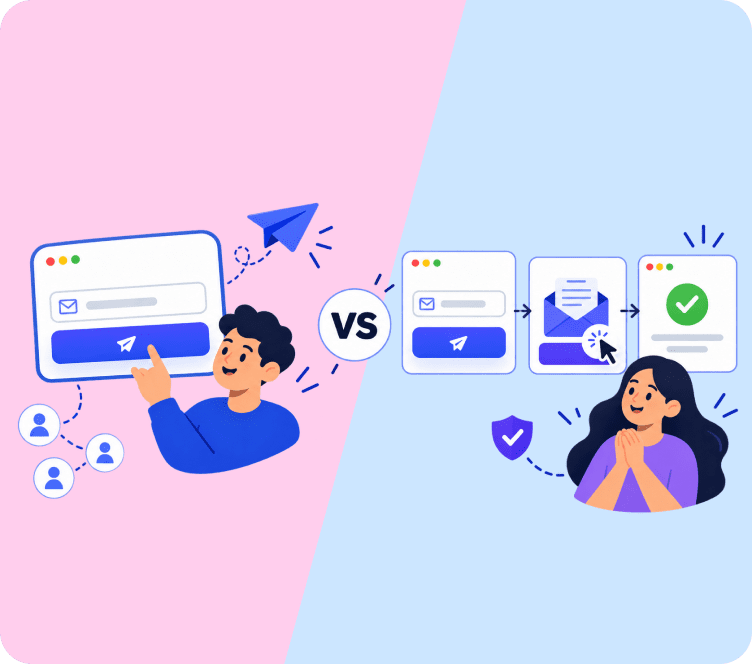
Email fatigue is the point at which subscribers feel overwhelmed or annoyed by how often a brand emails them, leading to declining engagement, rising unsubscribes, and increased spam complaints.
It's Rarely Just About Frequency
What is email fatigue often gets blamed entirely on send volume, too many emails, too often, but frequency is only half the story. A subscriber who wants daily updates from a brand they love won’t feel fatigued by daily email.
The same subscriber getting daily generic promotions with no relevance to their interests will feel fatigued quickly, even at a lower frequency. Email fatigue is really a mismatch between what’s being sent and what the subscriber actually wants, with frequency being the most visible symptom rather than the root cause.
The Signs That Show Up Before an Unsubscribe
Signs of email fatigue typically show up gradually before someone actually unsubscribes:
- Declining open rates on emails that used to perform well.
- Fewer clicks, even among still-active subscribers.
- A slow drift toward the inactive segment.
By the time unsubscribe rates spike noticeably, fatigue has usually been building for weeks, which is why watching engagement trends matters more than watching unsubscribe rate alone, the unsubscribe is the final, lagging signal, not the first one.
What Actually Reduces It
Ways to reduce email fatigue center less on simply sending less and more on sending more relevantly:
- Segmentation so content matches what a subscriber actually cares about.
- A preference center that lets subscribers set their own frequency.
- Honest self-assessment about whether every planned send earns its place in the inbox.
All three address the underlying mismatch rather than just the symptom. Email fatigue unsubscribe rate increases are also often industry and audience-specific, a highly engaged niche list can tolerate more frequent sending than a broad, lower-intent one, which is another reason a universal “send less” rule misses the actual fix.
The Segment That Feels Fatigue First
Fatigue rarely hits an entire list evenly. It tends to show up first among subscribers who were only ever mildly interested to begin with, someone who signed up for a one-time discount rather than out of genuine ongoing interest in the brand.
That group reaches its fatigue threshold at a much lower frequency than a genuinely engaged repeat customer would, which is why a single frequency applied uniformly across an entire list often means over-sending to the least interested segment while potentially under-sending to the most interested one.
Splitting frequency by engagement level, rather than treating the whole list as one audience with one tolerance level, addresses this mismatch directly.
Related terms:
Adflipr’s segmentation tools help match content to subscriber interest, addressing the relevance side of email fatigue rather than just cutting send volume.
Frequently Asked Questions
Email fatigue occurs when subscribers become overwhelmed by excessive sending frequency or repetitive content, leading to disengagement and unsubscribes.
Declining open rates, falling click-through rates, and a growing unengaged segment across multiple campaigns signal rising fatigue before unsubscribes spike.
Implement frequency capping, segment lists by engagement recency, and provide a preference center allowing subscribers to choose their send frequency.