Templates, whether that’s a Notion system, a Canva kit, or a resume pack, sell on trust more than almost any other digital category. A buyer can’t fully evaluate whether a template will actually solve their problem until they’ve used it, which means the biggest conversion lever isn’t a better product description, it’s proof, delivered before the sale to reduce hesitation and after the sale to make sure the buyer actually implements what they paid for.
Email marketing for digital templates has to carry that weight on both sides of checkout. Good digital template email marketing shows the template working before someone buys, walks them through setup the moment they receive it, and only introduces the bundle once they’ve had a real chance to succeed with the first piece. Below is how template use case emails build pre-purchase confidence, how template onboarding emails prevent the single biggest cause of refunds, and how a template bundle upsell converts once a buyer has already had a win.
Setup is where buyers get stuck, first-use confusion drives most template refunds.
A healthy refund rate is low, rates near five percent often signal setup issues.
Underpricing backfires, low-priced templates attract more complaints and less implementation.
A proven win sells the bundle, success with one template encourages a full-system purchase.
The Real Risk Isn't a Weak Template, It's an Unopened One
A template that never gets set up correctly might as well not have been bought at all, and in this category, that gap between purchase and actual use is where refund requests, bad reviews, and lost repeat customers almost always originate.
A buyer can't fully judge a template before buying
Setup confusion looks like a bad product
A buyer who gets stuck duplicating or configuring a template rarely blames themselves, they blame the file, even when a short walkthrough would have solved it in minutes.
A successful first use is the strongest sales signal
Someone who actually implemented a template and got value from it is a dramatically better lead for the full system than someone who simply completed a checkout.
Template Use Case Emails Prove It Works Before They Buy
Template use case emails work by showing a specific, real outcome, not a generic feature list, at the exact moment a hesitant buyer is deciding whether to complete the purchase.
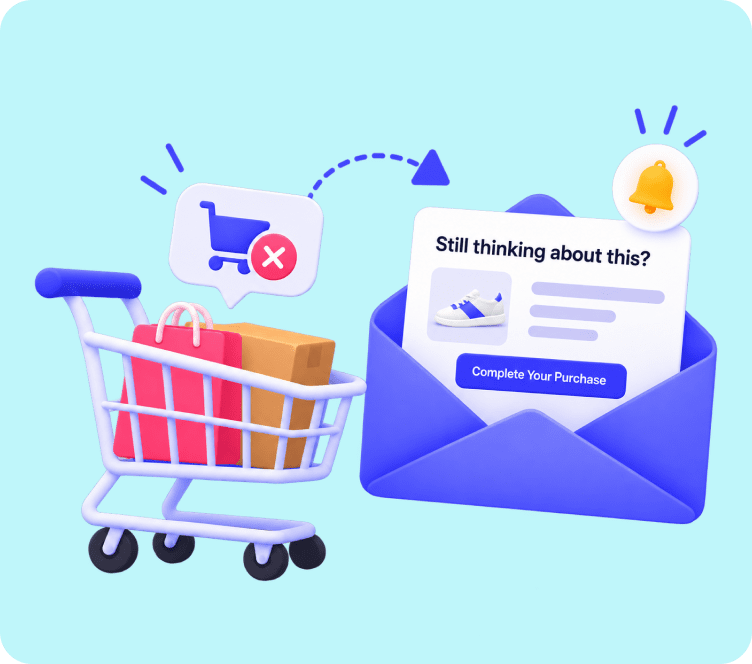
Lead with one specific before-and-after. A cart-abandonment email built around one concrete result, like how a resume template helped someone get past an applicant tracking filter, does more to convert than another discount code ever will.
Show the template being used, not just described. A short screenshot or walkthrough of the template in a real workflow answers the unspoken question every buyer has: will this actually work for me, before they have to ask it.
Match the proof to the buyer’s actual goal. A budgeting spreadsheet buyer cares about getting organized, not about which software it’s built in, and use-case proof framed around that underlying goal converts better than proof framed around the tool itself.
Template Onboarding Emails Prevent the Most Common Refund Trigger
Template onboarding emails work by walking a buyer through setup within minutes of delivery, since confusion at first use, not a flaw in the template itself, is what drives most refund requests in this category.
Send a short setup walkthrough immediately. A five-minute guide that arrives right alongside the download link prevents the single biggest cause of template refunds: a buyer who opened it once, got confused, and gave up before asking for help.
Address the exact step buyers get stuck on. Whether that’s duplicating a Notion page or unlocking a Canva template, naming that one specific action clearly removes the moment of friction that turns confusion into a refund click instead of a solved problem.
Check in a few days later, not just once. A brief “did it work for you?” message sent after the buyer has had time to actually use the template gives them a second chance to ask for help before deciding to request a refund instead.
Template Bundle Upsell Emails Land After the First Real Win
Template bundle upsell emails work by waiting until a buyer has actually implemented and benefited from the first template, since that proven success is what makes the full system feel like an obvious next step rather than a pushy add-on.
Time the offer to actual use, not checkout. A bundle pitch that arrives right after a buyer has had a chance to successfully use their first template converts better than one attached to the original purchase, where it just reads as an upsell popup.
Frame the bundle as the system, not more files. Positioning the bundle as everything the buyer needs to fully solve the underlying goal, not just additional templates, connects it directly to the success they already experienced.
Use their own proven outcome as the pitch. Referencing the specific way the first template already helped them is a stronger case for the bundle than any generic feature comparison could be.
How Adflipr Helps
| The job | Manually or with a generic email tool | With Adflipr |
|---|---|---|
| Pre-purchase proof | A static product page and nothing else | Use-case emails triggered during cart or browse abandonment |
| Onboarding | Buyers left to figure out setup alone | An automatic walkthrough email sent right at delivery |
| Refund prevention | Reactive support after confusion turns into a request | A proactive check-in before confusion becomes a refund |
| Bundle upsells | The same pitch sent to every buyer at checkout | Offers timed to buyers who’ve actually used the first template |
| Refund rate visibility | No clear signal something’s wrong until reviews slip | Purchase and refund data visible to catch problems early |
The WooCommerce integration is native and real-time, down to product variants. And the flows above are switched on, not built.
✓ Cart-abandonment proof emails
✓ Automated onboarding walkthroughs
✓ Usage-timed bundle upsells
✓ Active contact billing
Related industries:
Frequently Asked Questions
Most template refund requests come from setup confusion, not a flawed product, because a buyer who gets stuck duplicating or configuring a template tends to blame the file rather than ask for help. Digital template email marketing solves this with an onboarding email sent right at delivery that walks through the exact setup step buyers most often get stuck on.
Template use case emails work better than a longer product description, because a specific before-and-after result answers the real question a hesitant buyer has: will this actually work for my situation. Sending that proof during cart or browse abandonment resolves the hesitation at the exact moment it’s happening, instead of hoping the product page already covered it.
After the buyer has had a real chance to use and benefit from the first template, not immediately at checkout where it just looks like an upsell add-on. A template bundle upsell that references the buyer’s own proven success with the first purchase converts better than a generic “complete the set” pitch sent to everyone.
A low single-digit refund rate is generally a healthy sign for this category, while a rate climbing toward five percent or higher usually points to a setup issue or a product description that’s overpromising. Tracking refunds by product and pairing that data with onboarding emails is one of the most effective ways to catch and fix the problem before it shows up in reviews.