You spent two years building a following. Then the algorithm changed, and your launch post reached fewer people than a house party. That is the deal every clothing brand signed without reading it: you make the content, someone else decides who sees it. Your audience was never yours. It was rented. This is where clothing brand email marketing changes the math.
Email marketing for clothing brands is how you buy the land. A list you reach every time, drops that sell out on schedule, and a brand story told in full instead of in captions. Below is the system, piece by piece: how to move followers onto your list, how to run a launch by email, and how to keep money coming in during the quiet weeks between drops.
Under 5% of your followers see a typical organic post
100% of your email list receives every send you make
60 days is roughly how long the second purchase window stays open
25-35% of revenue comes from email in stores that run it properly
Why Email Marketing for Clothing Brands Beats the Algorithm
Move Followers Onto a List You Own
The follower-to-subscriber move is the single highest-leverage thing a clothing brand can do, because it converts rented attention into owned attention. And unlike retailers, a brand does not need to lead with a discount. Access is the currency:
First access to drops
“Join the list, shop 24 hours early.” For a drop-driven brand this converts better than percent-off, and it costs zero margin.
The lookbook signup
Behind-the-scenes, styling, the story of the next collection. People who follow for the aesthetic will subscribe for more of it.
Back-in-stock requests
A sold-out piece is a list builder. “Get notified if this returns” captures your hottest demand and tells you what to re-cut.
Run the Drop by Email, Not by Luck
Most drop revenue lands in the first 72 hours, which means a launch is won or lost before the weekend arrives. This is what product launch emails are for: putting that window on a calendar instead of hoping the feed cooperates.
T-minus 7 days: the tease
One hero piece, the story behind it, no link yet. Anticipation is the product before the product exists to buy.
T-minus 24 hours: VIP access opens
Your most devoted subscribers shop first, at full price, no discount attached. This is the email that makes “join the list” worth something.
Launch day: public open
Send at the exact minute the drop goes live. Short copy, big imagery, one button. The list should hear before social does, every time.
48 to 72 hours: the honest last call
What is nearly gone, in which sizes. In a real drop, stock actually runs out, so saying so is truth, not a tactic borrowed from retail.
Your Welcome Series Has One Job Retail Doesn't: Sell the Meaning
A retailer’s welcome email sells a discount. A clothing brand’s welcome series has a harder job, because the subscriber already likes the look. What they have not bought yet is the reason it costs what it costs, and that reason has to arrive before the first invite to purchase.
Job one: explain why the brand exists. Not a mission statement. The specific problem with everything else on the market, told through a real moment, a real frustration, a real decision that led to the first collection. This is the email people forward to a friend.
Job two: make the craft visible. Fabric sourcing, the factory, the person who cuts the pattern. Once someone has seen the hands behind a piece, a markdown looks like an insult rather than an opportunity.
Job three: hand the invitation to the right person. Only after the first two emails does the brand ask for the sale, and it should feel like access, not a transaction. Early entry to the next drop, or a members-only piece, beats a percent-off code every time.
The Quiet Weeks Between Drops Are Where Brands Die
Launch-to-launch revenue is a rollercoaster, and the dip is self-inflicted: the brand simply stops talking. Email automation for clothing brands keeps selling through the silence, without diluting the drop model:
Styling the last drop. How owners are wearing it, what pairs with what. Content that keeps pieces in rotation keeps the brand in mind.
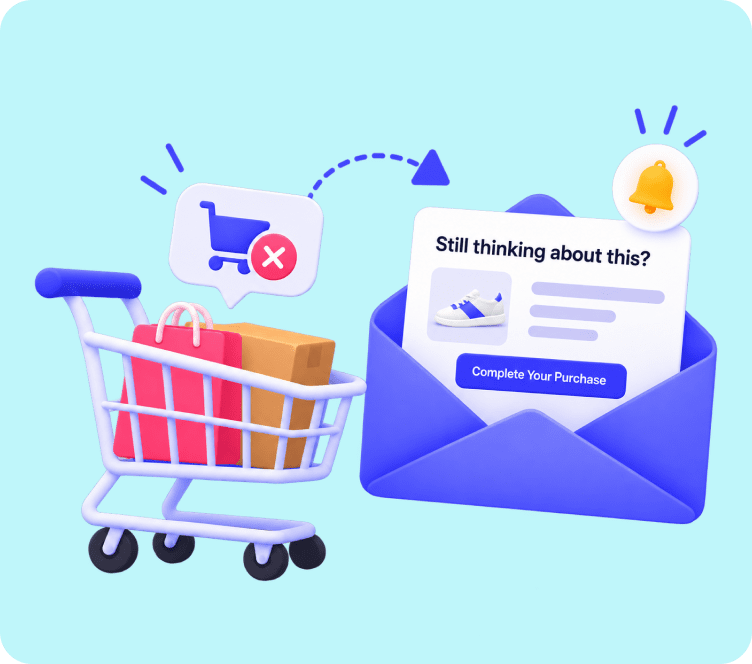
Abandoned cart recovery. Even hype carts get abandoned. A reminder within the hour and a follow-up next day, both selling confidence, not coupons, quietly reclaim launch revenue that looked lost. Abandoned cart recovery matters even for a brand people are excited about; distraction abandons carts as often as doubt does.
The restock story. When a sold-out piece returns, everyone who requested it gets first word. Restocks are mini-drops, and they cost nothing to create.
The win-back. Buyers from two drops ago who skipped the last one get a personal-feeling note about what is coming. In a brand, win-back is re-invitation, never markdown.
Related industries:
Most of Your List Has Never Bought Anything. That Is Fine, If You Treat It That Way.
Clothing brand email marketing usually fails at one spot: the whole list gets treated like it is one drop away from buying. It is not. Devotion runs on a spectrum, and each stage needs a different email, not a different discount.
Stage 1: Watching (the widest group)
Subscribed, opens occasionally, never purchased. They need the origin story and the proof, not another launch announcement they will scroll past again.
Stage 2: Warming
Bought once, engaged since. Show them what pairs with what they own, and give them a reason to see the next drop as part of their existing pieces, not a new decision.
Stage 3: Devoted (the smallest group, the most valuable)
Buys within hours of every launch. This group should never see the public sequence. Give them the earliest access and, occasionally, a piece nobody else gets.
Full-price protection sits on top of all three stages: whichever stage someone is in, a genuine full-price buyer should never receive a discount code. That single rule protects the price of everything the brand sells.
How Adflipr Helps
| The job | Manually or with a generic email tool | With Adflipr |
|---|---|---|
Running a drop | Schedule sends by hand, hope the timing holds, no early-access tiering | Tease, VIP early access, launch, and last-chance sequence built once and reused every drop |
Restock alerts | A mass “back in stock” blast to the whole list | First word goes only to the people who asked, size by size |
| Segmentation | Hand-built lists that go stale after every drop | Day-one buyers, full-price loyalists, and lapsed collectors update themselves from store data |
Your monthly bill | Priced on total list size, dead addresses included | Active contact billing, so you pay for subscribers who engage |
The WooCommerce integration is native and real-time, down to product variants. And the flows above are switched on, not built.
✓ Prebuilt brands flows
✓ Variant-level store sync
✓ Revenue tracking per email
✓ Active contact billing
Frequently Asked Questions
Offer something a follow does not already give them: early access to drops, a first look at the next collection, or a notification when a sold-out piece returns. A discount can work but is not necessary, and for premium brands it can undercut the exact positioning the brand is selling. The signup should feel like joining something, not entering a raffle.
Good product launch emails run on a four-beat calendar: a tease 5 to 7 days out with story and no link, a VIP early-access send 24 hours before public launch, the launch-minute send itself, and a last-chance email at 48 to 72 hours naming what is nearly gone. This puts the critical first 72 hours of drop revenue on a schedule instead of leaving it to whichever post the algorithm decides to show.
Rarely, and never as the default lever. Discounts pull revenue forward while quietly training the list to wait for the next one, which erodes the premium a brand is built to charge. Access performs the same job without the cost: early entry, members-only pieces, first word on restocks. Save real discounting for clearing a genuine excess, not for driving a normal launch.
Done well, email marketing for clothing brands should contribute 25 to 35 percent of total revenue once the drop sequence, welcome series, and devotion-based segments are running. Expect the sharpest concentration of that revenue on launch days, since early access and launch-minute sends pull buying into a narrow window, and steadier contribution in the weeks between drops as the automated flows do their work.