Somewhere in your order history is a customer who bought two sizes of the same shoe, planning to return one. Footwear is the one category where that is normal, not fraud, and it quietly wrecks two things at once: your return rate and your inventory picture. No other apparel category has this problem at this scale, because no other category makes half a size feel like the difference between comfortable and unusable.
Email marketing for shoe stores has to be built around that reality, not borrowed from a generic apparel playbook. Below is what actually moves the numbers: capturing fit data before the sale, recovering the specific kind of cart a shoe buyer abandons, and reaching customers again at the exact month their shoes start wearing out, not whenever the next sale happens to land.
Up to 30% of shoes bought online get returned, well above general apparel
2 sizes is common practice for online shoe buyers unsure of fit, with one going back
300-500 miles is roughly when a regular running shoe needs replacing, a built-in reorder point
25-35% of revenue is realistic for a footwear store once fit and wear-cycle flows are running
Footwear Has a Fit Problem That Looks Like a Returns Problem
Every ops report calls it a returns problem. It is really a confidence problem wearing a return label. A shoe is the one purchase where sizing is not standardized between brands, or even between two models from the same brand. A size 9 running shoe and a size 9 dress shoe do not fit the same feet, and customers know this from experience, which is exactly why so many of them order a size up and a size down just to be sure.
Roughly a third of footwear ecommerce orders come back, and fit uncertainty, not dissatisfaction with the shoe itself, drives most of it.
Treating this as a shipping cost problem misses the fix. The fix is upstream, and it is exactly what shoe store email marketing should be built to solve: give shoppers enough fit confidence before checkout that they only need to order one size, and give them enough reassurance after checkout that returned pairs come back as exchanges instead of refunds. Email sits at both ends of that fix.
Build a Fit Profile Before You Ever Send a Cart Recovery Email
Most stores collect an email address and start selling immediately. A shoe store that does this is selling blind, because the single most useful piece of data in footwear, how a customer’s foot actually fits, is never asked for.
1. Ask at signup, not at checkout
A short fit quiz on signup: true-to-size, runs wide or narrow, and primary activity. It takes fifteen seconds and it is worth more than a discount code, because it turns every future email into a fit-aware recommendation instead of a guess.
2. Confirm it after the first order
The size someone actually kept, versus the size they returned, is more reliable than anything they told you at signup. Feed real purchase outcomes back into the profile automatically.
3. Use it everywhere after that
Size restock alerts, new arrivals, and cross-category recommendations should all filter through this profile. A size 11 wide buyer should never see a “true to size only” shoe recommended as their next best fit, and size restock alerts should only reach the customers who actually wanted that size.
Not All Abandoned Shoe Carts Need the Same Bracketed Cart Recovery
Generic abandoned cart emails assume one kind of hesitation. Footwear has at least two, and they need different messages entirely.
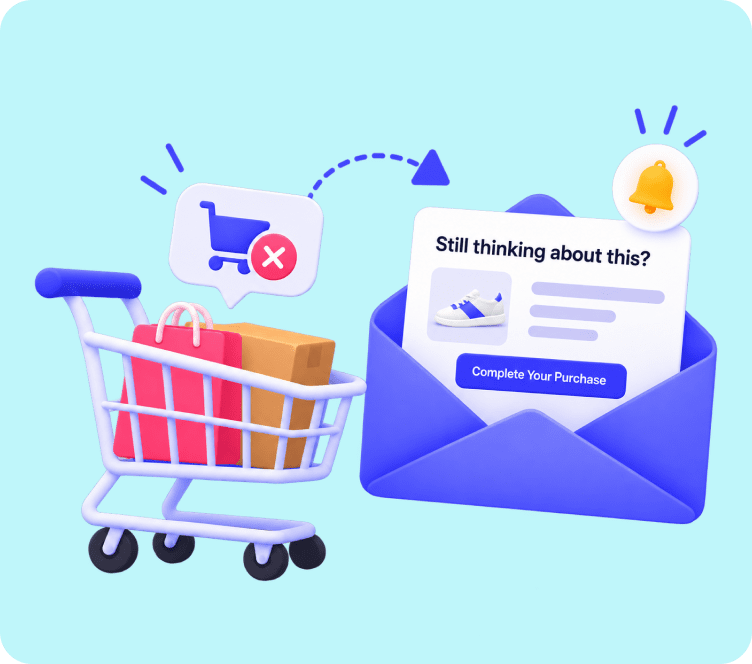
The bracketed cart
Two sizes sit in the cart, or two were ordered and one is already flagged for return. The email here should not push urgency. It should confirm the exchange policy and make reordering the kept size effortless next time, protecting the relationship instead of the immediate sale.
The undecided cart
One pair, abandoned mid-checkout, usually from fit anxiety rather than price. This email should lead with the fit profile: true-to-size confirmation, a half-size-up or half-size-down note if the model runs that way, and the return window stated plainly. Confidence closes this cart, not a discount.
Sending the same generic reminder to both carts is why so many footwear recovery flows underperform. Splitting them by cause, not just by timing, is what actually lifts the recovery rate.
The Replenishment Emails Most Stores Never Send
Clothing gets replaced by choice. Shoes get replaced by wear, and wear is predictable. This is the single biggest untapped automation in footwear email marketing, because almost no store sends replenishment emails timed to when the product is actually dying.
Running and training shoes
Cushioning breaks down around 300 to 500 miles for most runners, which for a regular user lands somewhere between four and eight months. A “time for a fresh pair” email timed to that window reaches people while the old pair is failing, not months after they already replaced it elsewhere.
Everyday and work shoes
Daily wear shoes show visible sole wear in six to twelve months depending on use. A check-in email around month nine, tied to the exact model purchased, catches the replacement decision before a competitor does.
Boots and seasonal footwear
These do not wear out by mileage, they wear out by season. A pre-season email timed to when the boots or sandals were bought last year outperforms a generic seasonal blast, because it is addressed to someone who already proved they buy that category.
Segment by How the Shoe Gets Used, Not Just What Was Bought
By activity. Runners, hikers, everyday wearers, and dress shoe buyers each read different content and respond to different urgency. A trail running email means nothing to a dress shoe buyer.
By width and fit profile. Wide and narrow-fit customers should see new arrivals filtered to their profile first. A regular-width new arrival sent to a wide-fit customer is a wasted email and a small trust cost.
By replacement stage.Someone six months into a running shoe’s life is a very different message than someone who just unboxed it. Timing the email to product age, not to a calendar date, is what separates a shoe program from a generic apparel one.
By return behavior. Frequent bracketers are not a problem to punish, they are a segment to guide toward better fit data so the next order only needs one size.
Related industries:
How Adflipr Helps
| The job | Manually or with a generic email tool | With Adflipr |
|---|---|---|
Fit profile at signup | A generic newsletter signup with no fit data collected | A short fit quiz that feeds every future email automatically |
| Size restock alerts | A mass “back in stock” email to the whole list | Sent only to the customers who wanted that exact size |
Reorder timing | No system, replacement emails sent late or never | Wear-cycle emails timed to product category and purchase date |
Bracketed cart recovery | The same abandoned cart emails sent to every shopper, bracketed or not | Bracketed and undecided carts split into two flows with different messaging |
Your monthly bill | Priced on total list size, dead addresses included | Active contact billing, so you pay for subscribers who engage |
The WooCommerce integration is native and real-time, down to product variants. And the flows above are switched on, not built
✓ Prebuilt footwear flows
✓ Fit-profile personalization
✓ Wear-cycle reorder timing
✓ Active contact billing
Frequently Asked Questions
Mostly because footwear sizing is not standardized. A size 9 in one brand or model does not match a size 9 in another, so many online shoppers order two sizes and return one, a practice known as bracketing. It is not dissatisfaction with the product, it is uncertainty about fit, which is why collecting fit data before the sale reduces returns more than any post-purchase policy can.
On product-specific timing, not a fixed calendar. Running and training shoes wear out around 300 to 500 miles, which is roughly four to eight months of regular use, so a reorder email in that window catches the decision while it is being made. Everyday shoes run closer to six to twelve months. A single reorder email timed to the actual product replaces several untimed promotional blasts.
Good email marketing for shoe stores should drive 25 to 35 percent of total revenue once fit-profile capture, split cart recovery, and wear-cycle reorder emails are running. The reorder flow typically becomes the highest-margin email in the program, since it reaches an existing customer at the exact moment of need rather than competing for attention with a discount-driven campaign.