A brand selling through retail gets a shelf, a display, a salesperson who can answer a question in person. A direct-to-consumer brand gets none of that, which means email isn’t a nice supplement to some other experience, it often is the experience. No in-store moment exists to build trust, explain the product, or turn a browser into a believer, so the entire job of a retail floor has to happen somewhere else entirely.
Email marketing for DTC brands carries more weight than it does for almost any other business model, because there’s no retail intermediary picking up the slack, and it comes with a real advantage most retail-distributed brands never get: full ownership of the customer relationship and the data behind it. Good DTC brand email marketing uses that ownership deliberately. Below is how email replaces the missing retail experience, how founder story becomes a genuine competitive advantage, and why first-party data is a strategic asset unique to this model.
No retail floor exists a DTC brand has no in-store moment to build trust, so email has to do it
The founder is the differentiator, the story can stand out when products don’t.
The data belongs to the brand, DTC brands own the customer relationship directly.
Email carries more weight it isn’t a supplement to a retail experience, it frequently is the experience
There Is No Salesperson to Pick Up the Slack
A retail-distributed brand gets help it never has to build itself: a physical shelf, in-person browsing, a salesperson who can answer a question on the spot. A DTC brand has none of that infrastructure, which means every job a retail experience normally handles, education, trust-building, discovery, has to happen somewhere the brand fully controls.
When there's no store to walk into, email becomes the closest thing a DTC brand has to a physical retail experience, and treating it as a minor marketing channel rather than the primary relationship badly undersells its importance.
Founder Story Emails Turn a Similar Product Into a Different Choice
When a product looks similar to several competitors, the reason someone chooses one DTC brand over another is rarely the product spec sheet, and founder story emails work by giving customers a real reason rooted in people, not features.
Tell the actual origin, not a polished summary. The specific problem, frustration, or moment that led to starting the brand is far more compelling than a generic “we care about quality” statement every competitor also makes.
Let the story evolve with the brand. Milestones, real challenges, and genuine behind-the-scenes moments keep the founder narrative feeling alive rather than frozen as a one-time “about us” page nobody revisits.
Connect the story to the product, not just the brand. Explaining why a specific decision, an ingredient, a material, a process, reflects the founder’s actual values makes the product itself feel like an extension of the story, not a separate thing being sold alongside it.
First Party Data Emails Use the One Real Advantage This Model Has
A DTC brand’s biggest structural advantage over a retail-distributed competitor is owning the customer relationship directly, and first party data emails work by actually using that ownership instead of treating email as just another broadcast channel.
Build real customer profiles from real behavior. Every purchase, click, and interaction is data a retail-distributed brand never gets access to at all, and using it to personalize every future email is the advantage DTC exists to provide.
Reduce dependence on rented audiences. An email list, unlike a social platform following, cannot be taken away by an algorithm change, and building it deliberately protects the brand from platforms it doesn’t control.
Feed insight back into the whole business. What customers actually respond to in email often reveals real product and positioning insight that should inform decisions well beyond the marketing calendar alone.
An Owned Channel Strategy Treats Email as the Primary Relationship, Not a Backup
Owned channel strategy works by treating email and other channels the brand fully controls as the center of the growth plan, not an afterthought layered on top of paid acquisition.
Prioritize the channel that compounds. Unlike ad spend, which stops producing the moment it stops being paid for, an owned list keeps generating value long after the cost of acquiring each subscriber has been spent.
Design every touchpoint intentionally. Since there’s no retail environment shaping the brand experience, every email is doing double duty, marketing and brand-building at once, and deserves the same care a retail environment would get.
Measure the relationship, not just the campaign. Looking at long-term customer value from the owned list, not just single-campaign performance, reflects what actually matters for a brand built on direct relationships.
How Adflipr Helps
A founder story sequence that actually builds a relationship, first-party data put to real use in every recommendation, an owned channel strategy treated as the center of growth: each one depends on the tool seeing real order and customer data, live, whether the store runs on Shopify or WooCommerce. Adflipr is built on that connection, purpose-built for DTC brand email marketing rather than adapted from a generic template, with every flow on this page ready to switch on. This is what real DTC email marketing requires.
| The job | Manually or with a generic email tool | With Adflipr |
|---|---|---|
| Founder storytelling | A one-time “about us” page nobody revisits | An evolving sequence that keeps the founder narrative alive over time |
| First-party data use | Customer data collected but never actually used | Real behavior and purchase data driving every recommendation |
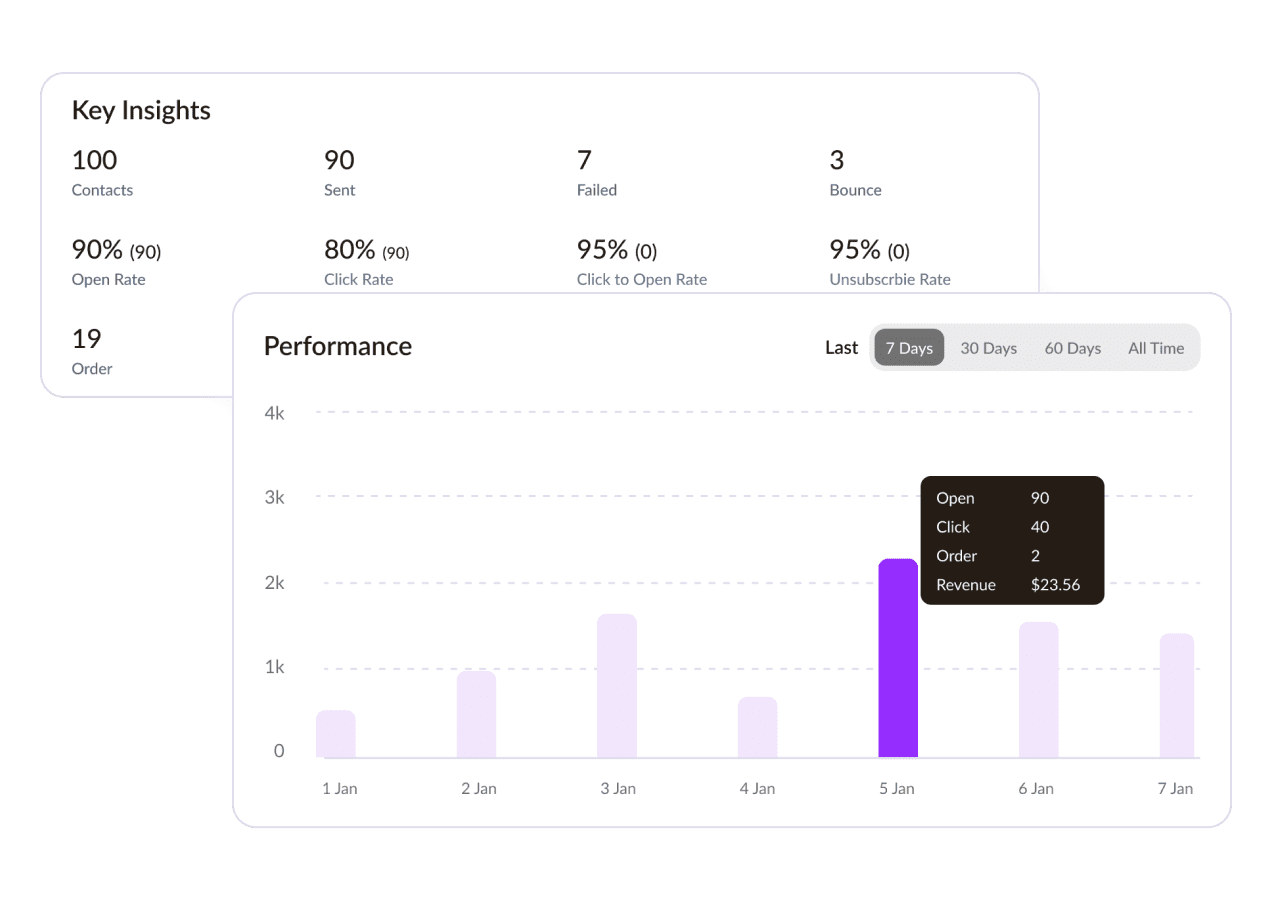
| Owned channel priority | Email treated as a backup to paid acquisition | A primary growth channel with revenue tracked per email |
| Retail-experience replacement | No structured education or trust-building sequence | A full onboarding and trust-building journey built into email |
Your monthly bill | Priced on total list size, dead addresses included | Active contact billing, so you pay for subscribers who engage |
The WooCommerce integration is native and real-time, down to product variants. And the flows above are switched on, not built.
✓ Founder story sequencing
✓ First-party data personalization
✓ Owned channel revenue tracking
✓ Active contact billing
Frequently Asked Questions
Because there’s no physical store or salesperson to build trust and explain the product, which means email has to replace that entire missing layer of the customer journey. This carries more weight for exactly this reason, functioning less like a supplementary marketing channel and more like the primary relationship the brand has with its customers.
By telling the real origin honestly, not a polished summary, and letting the story evolve with genuine milestones over time rather than freezing it on a one-time about page. Founder story emails that connect the narrative directly to product decisions give customers a real reason to choose the brand when the product itself looks similar to competitors, which is one of the sharpest tools in DTC brand email marketing.
Use it actively to personalize every future email, not just collect it passively. First party data emails built from real purchase and behavior data give a DTC brand an advantage no retail-distributed competitor has access to at all, and feeding that insight back into broader business decisions extends the value of owning the customer relationship well beyond the inbox.
A realistic goal for email marketing for DTC brands is meaningfully stronger customer lifetime value once an owned channel strategy replaces dependence on rented, paid acquisition alone. DTC email marketing done well typically becomes one of the highest-return channels a brand has, since the audience is owned outright and keeps generating value long after the cost of acquiring each subscriber has already been spent.